Sri Lanka's Stilt Fishermen: The Story Behind the Icon
May 9, 2026 · by AquaTrek
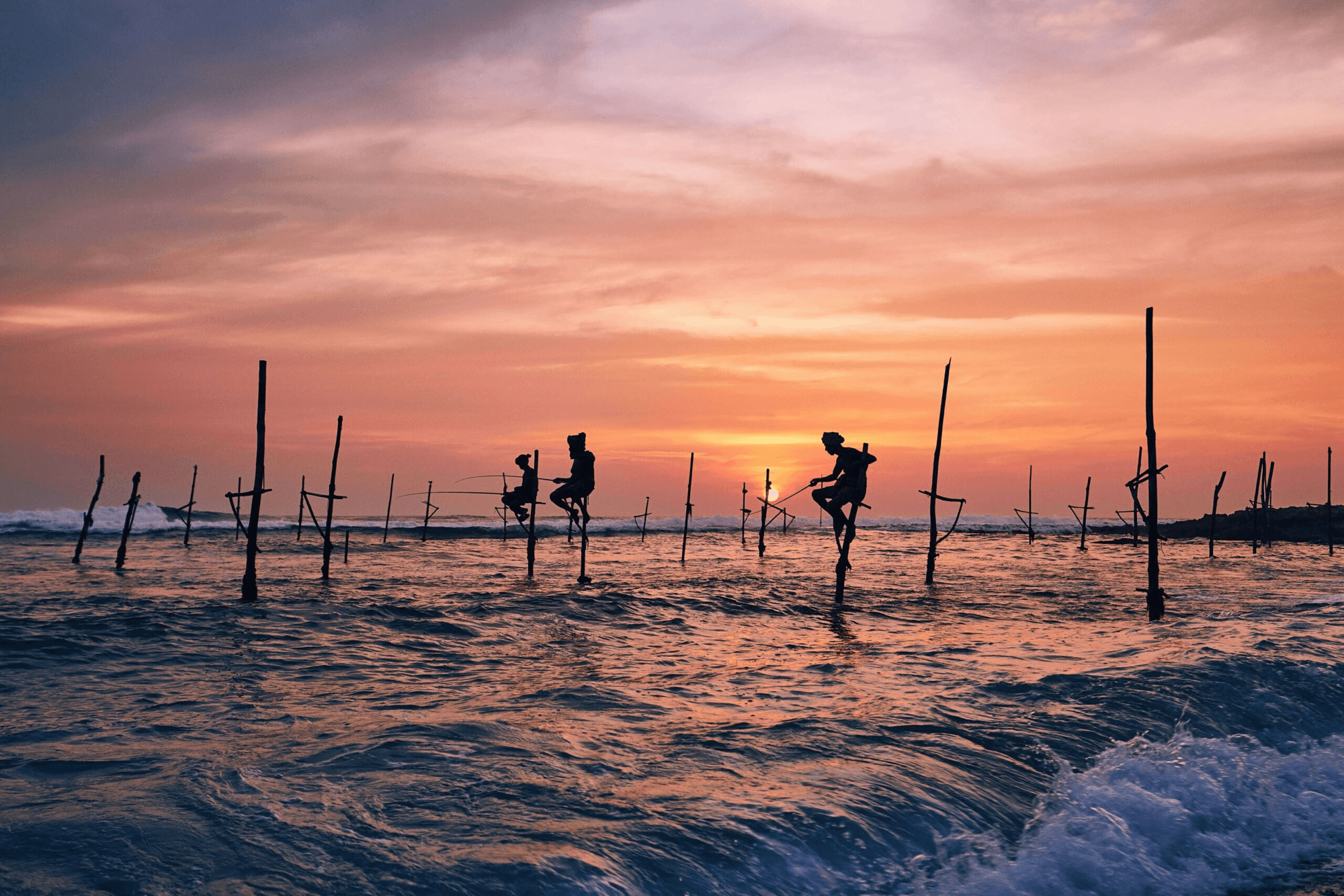
If you have seen a travel photograph of Sri Lanka, there is a reasonable chance it showed a fisherman perched on a cross-pole driven into the surf, rod in hand, the Indian Ocean stretching behind him in the amber light of late afternoon. The stilt fishermen of the south coast — clustered most visibly between Koggala and Weligama, visible from the coastal railway — are among the most recognisable images in South Asian travel photography. They appear on magazine covers, in airline advertisements, and in every collection of "iconic Asia" stock imagery.
What those photographs rarely explain is who these men are, where the tradition comes from, how it actually works, and what is happening to it now.
The Origins of Stilt Fishing
The popular claim — repeated in countless guidebooks and tour descriptions — is that stilt fishing in Sri Lanka dates back to World War II, when the Japanese occupation of Southeast Asia disrupted fishing in the region and Sri Lankan fishermen, lacking fuel for their boats, improvised the stilt system to access the shallow reef without needing to wade. This is the story most guides tell.
The evidence for this account is thin. No scholarly source has confirmed it. Photographs of stilt fishermen in Sri Lanka predate World War II, and the technique bears no obvious relationship to wartime resource scarcity. The stilts are not an improvisation — they are engineered, permanent structures requiring specific timber, specific positioning in relation to the reef, and passed-down knowledge about how to fish them.
A more plausible account is that the stilt system evolved as a response to a specific ecological problem on the south coast: the reef system between Koggala and Weligama is extensive and shallow, making boat fishing difficult in the inner zone without damaging the coral. The stilts allow a fisherman to access the optimal position above the reef edge without a boat, working with a long rod and a fixed line in the current. The position matters — stilt fishermen occupy sites that their families have worked for generations, which is why the petta (stilt right) system exists.
The Petta System: Inherited Rights
The most important thing to understand about stilt fishing, which photographs never show, is that the stilts are property. Each petta — the Y-shaped post driven into the seabed — belongs to a specific family and is inherited through the male line. A fisherman does not simply plant a stilt wherever he chooses; the rights to specific sites have been negotiated, inherited, and occasionally disputed between families for as long as the system has existed.
In some families, the petta is a primary economic asset, passed with the same seriousness as land. In others, it supplements income from other fishing methods or other occupations. The number of working petta sites has declined significantly over the past three decades as the value of stilt fishing income has dropped relative to other opportunities.
How Stilt Fishing Actually Works
The practical technique is simple but requires judgement. The fisherman climbs onto the cross-pole — a wooden bar lashed horizontally across the main stilt, about two to three metres above the water surface at high tide — and fishes with a hand rod and a single hook, no bait. The line is short, rarely more than two or three metres, positioned to trail in the current over the reef.
The target species are small: principally balaya (skipjack), thora (trevally), and various species of mackerel that move in the current over the reef edge. The catch is modest — a few kilograms on a good session, often less. The stilt position is most productive around the turn of the tide, when water movement brings fish over the reef. Sessions typically last two to four hours, and a fisherman might work two or three tides in a day.
The physical reality is more demanding than photographs suggest. Standing or crouching on a cross-pole above moving water for hours, in full sun, with the rod constantly in hand, is physically tiring. The stilts themselves require maintenance after storms — posts work loose in the seabed and must be redriven or replaced. The timber is typically mangrove, chosen for its density and resistance to saltwater rot.
What Happened to the Economics
In the 1960s and 1970s, stilt fishing was a viable primary income for families along the south coast. The catch was sold fresh at local markets; the system was economical because it required no fuel, no boat, and minimal equipment. A family with good petta rights in a productive location could earn a reasonable living.
Several things changed simultaneously. Motorised boat fishing expanded dramatically after the 1970s, making it possible to access offshore stocks previously unreachable for small-scale fishermen. This increased total catch volumes but also depressed local fish prices. The expansion of Sri Lanka's tourism economy from the 1980s onward created alternative income opportunities — hotels, tuk-tuks, restaurants, guiding — that offered more reliable money than the weather-dependent stilt system. And the same tourism economy created a secondary market for the image of stilt fishing that has, paradoxically, both preserved and distorted the tradition.
Today, many of the fishermen visible to tourists — particularly those in the most photographed locations near Koggala — are fishing for photographs as much as for fish. A longstanding arrangement allows photographers to pay a small fee (typically Rs 200–500) to photograph a fisherman on his stilt. The fisherman climbs the stilt, positions himself against the light, and the transaction is mutually understood. This is not deception — the fisherman has legitimate rights to the stilt and is genuinely a fisherman — but the economics of the interaction have shifted from fish-selling to image-selling.
Further east, in less-visited stretches, you can still find fishermen working their stilts primarily as a fishing method rather than a photographic one. The difference is visible: these men are not watching for tourists with cameras. They are watching the water.
Stilt Fishing and the Cast Net Tradition on Rathgama Lake
The spectacular drama of stilt fishing in ocean surf should not obscure the quieter and arguably more ancient tradition of lake fishing on the coastal lagoons. On Rathgama Lake, the primary traditional fishing method is the jalaya — the cast net — thrown from a small outrigger canoe in the pre-dawn hours.
The cast net requires skill that takes years to develop properly. The net — circular, weighted at the edges with small lead sinkers, attached to a central line — is gathered in a specific configuration in the hands and thrown in a single spinning motion that opens it into a complete circle over the water. The weights carry the edges down immediately, trapping fish beneath. Thrown badly, it opens partially or tangles. Thrown well, it billows open like a perfectly symmetrical flower and closes before the fish can react.
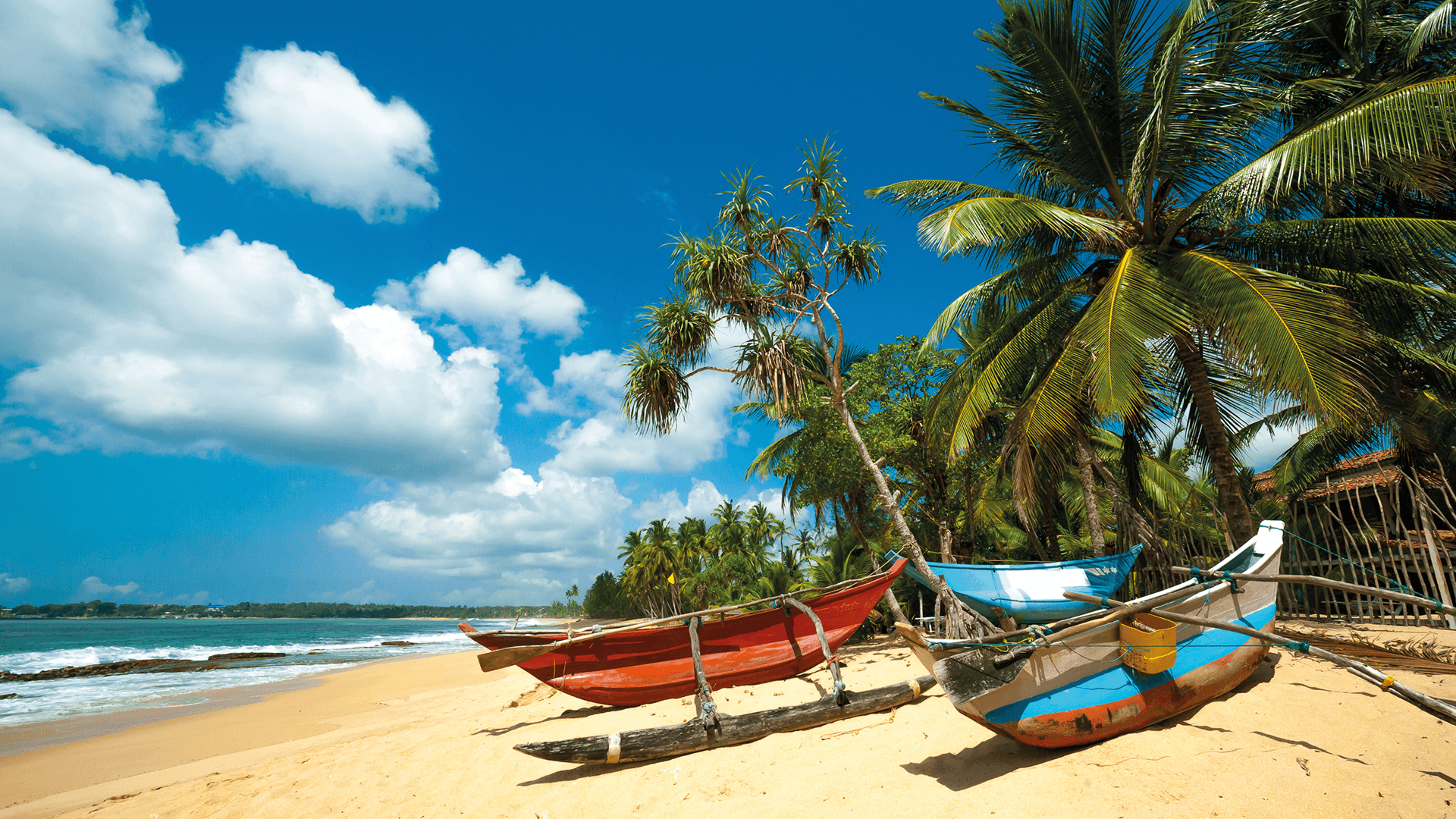
The men who fish Rathgama Lake at dawn have been doing this since before the Portuguese arrived. The canoes are the same design — outrigger, wooden, low-sided, paddled with a single-bladed paddle — as those described by European visitors in the 16th century. The fish they catch are the same species that have always lived in this lake.
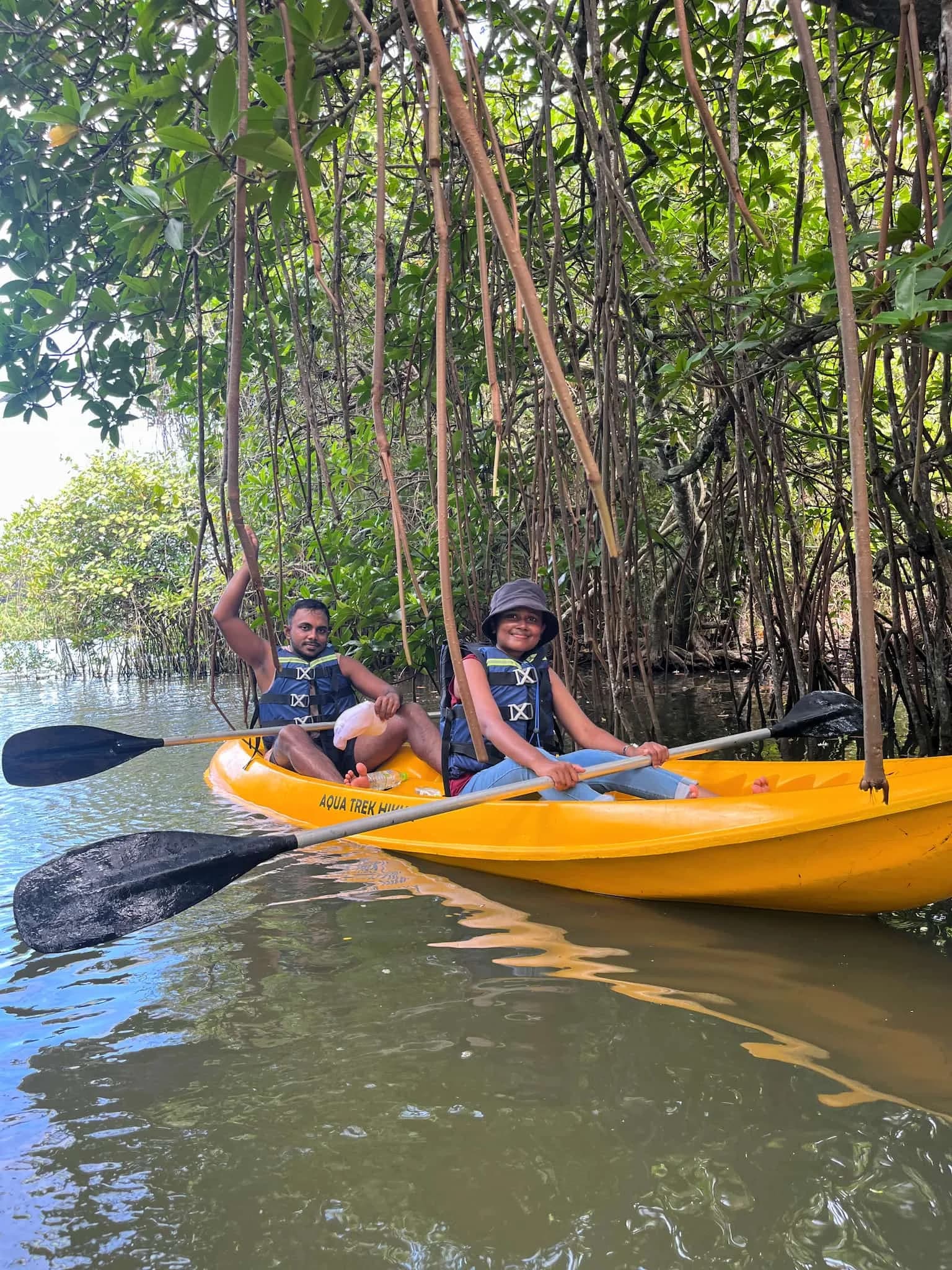
On an early morning kayak tour on Rathgama, you will paddle past these fishermen. The polite and correct thing to do is slow down, give wide berth, and avoid interfering with the nets. In practice, the fishermen are wholly absorbed in their work and pay little attention to kayaks. The two activities — traditional fishing and tourist kayaking — coexist on the lake without friction.
The Wider Fishing Culture of the South Coast
The fishing communities of the south coast — Hikkaduwa, Dodanduwa, Telwatta, Ambalangoda, Balapitiya — have a distinct social character shaped by centuries of small-scale maritime work. They are predominantly Catholic (a legacy of Portuguese-period conversion) in a country that is predominantly Buddhist. They speak Sinhala with coastal dialect features. Their economic lives have historically centred on the sea and the lagoons, and the built environment of these villages — the church at the centre, the fishing families living nearest the water, the boat-building yard that occupies a specific patch of beach — reflects this.
The 2004 tsunami struck these communities with particular force. Fishing boats were destroyed, gear was lost, and the infrastructure of the fishing economy — the ice plants, the auction sheds, the net-repair facilities — was badly damaged. The rebuilding took years and was assisted by a combination of Sri Lankan government programmes and international NGO support, which not everyone acknowledges worked smoothly or equitably. Some fishing families received rebuilt boats; others did not. Some petta rights that were destroyed by the tsunami have not been formally restored.
The fishing community of the south coast is resilient in the way that fishing communities everywhere tend to be: because the alternative to resilience, for people whose livelihoods depend on an unpredictable ocean, is not surviving. The stilt fishermen who work the surf today are doing so with the accumulated knowledge of families that have fished this coast for centuries. The tourist who photographs them from a bus window is seeing the visible tip of something much larger and much older.
Visiting Responsibly
If you want to see stilt fishing, the stretch of coast between Koggala and Weligama — visible from the coastal railway — is where to look. The best light for photography is the late afternoon, roughly 4–6 PM, when the sun is low to the southwest and the fishermen tend to be working.
Asking before photographing is always appropriate. Paying a small fee when it is requested is reasonable — the fisherman has legitimate rights to the stilt and is providing access to a photograph he is under no obligation to permit.
For a less photographic and more genuinely immersive encounter with the south coast's fishing culture, a dawn kayak on Rathgama Lake places you on the water with the lake fishermen at the hour when they are most actively working. There is no transaction involved and no performance. It is simply two kinds of boats sharing the same water at the same early hour, doing different things for different reasons.