Sri Lanka's Ancient Relationship with the Sea
May 12, 2026 · by AquaTrek
Sri Lanka is an island of 65,610 square kilometres, ringed by 1,340 kilometres of coastline. No point on the island is more than 100 kilometres from the ocean. This is not merely a geographical fact — it is the organising principle of Sri Lankan civilisation. The sea has fed its people, carried its merchants, delivered its colonisers, and framed its cosmology for as long as records exist.
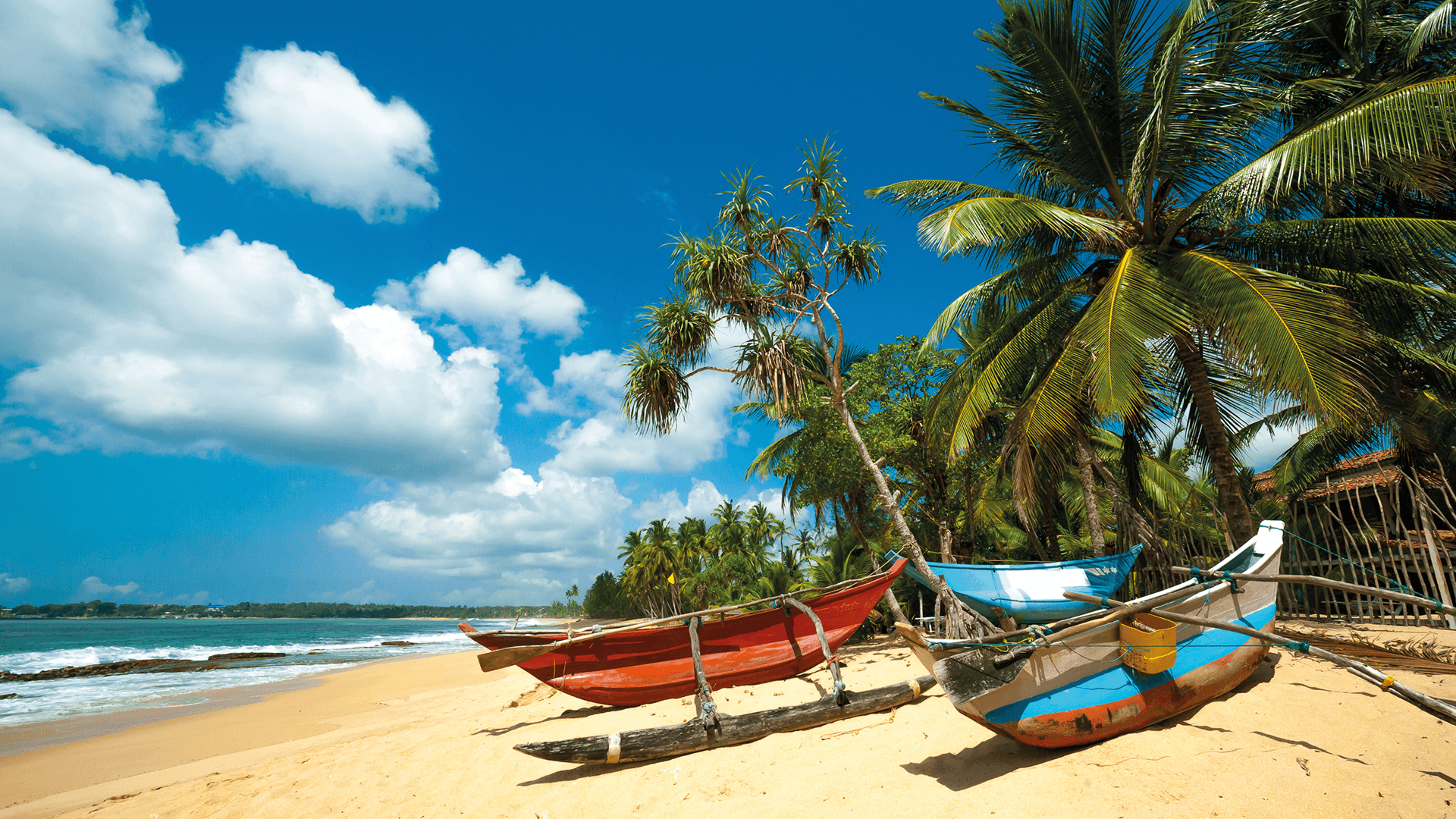
To spend time on the coast of southern Sri Lanka — on Rathgama Lake, at Galle, along the fishing beaches at Dodanduwa — is to move through a landscape where this history is not abstract. It is visible in the outrigger canoes, in the technique of the cast-net fisherman, in the ancient stilt fishing platforms that still stand in the surf off Koggala, and in the monasteries built on islands in the middle of brackish lagoons.
The Ancient Maritime World
Sri Lanka's strategic position at the centre of Indian Ocean trade routes meant that it was a known and visited place long before recorded history. The island appears in ancient Indian literature as Lanka (in the Ramayana, written in its current form between approximately 500 BCE and 100 CE), and in Greco-Roman geographical texts as Taprobane — a name derived from the Sanskrit Tamraparni, meaning "copper-coloured leaves."
The Greek geographer Ptolemy, writing in the 2nd century CE, included Sri Lanka on his map of the world. Arab traders called it Serendib — the root of the English word "serendipity," coined by Horace Walpole in 1754 from a Persian fairy tale set on the island. Chinese Buddhist pilgrim Fa Hien visited in the 5th century CE and wrote detailed accounts of what he found.
What all these visitors found was a functioning, prosperous maritime civilisation. The ancient port of Mantai, on the northwest coast, has been excavated to reveal trade goods from Rome, Persia, Arabia, India, and Southeast Asia — all converging on a single Sri Lankan harbour. Cinnamon, pearls, elephants, gemstones, and woven cloth went out. Glass, ceramics, metals, and coinage came in.
The south coast, including what is now Hikkaduwa and Galle, was part of this world. Galle became the primary harbour of the southern coast, its natural deep-water bay making it preferable to the exposed beaches further along. Arab traders established a permanent presence there before the 13th century. The name "Galle" itself may derive from the Sinhala gala (rock) or — according to some scholars — from the Portuguese adaptation of an Arabic place name.
The Portuguese Arrival and the Cinnamon Wars
In 1505, a Portuguese fleet under Lourenço de Almeida arrived at Galle by accident — blown off course en route to the Malabar Coast of India. The Portuguese had been searching for cinnamon, which at that point commanded extraordinary prices in European markets because all supply was controlled by Arab and Venetian traders. Sri Lanka grew the finest cinnamon in the world.
What followed was 150 years of Portuguese presence on the Sri Lankan coast — not conquest of the interior, which the Sinhalese kingdom of Kandy successfully resisted, but control of the coastal ports and the cinnamon trade. Galle Fort was originally built by the Portuguese in 1588, though almost nothing of that structure survives. The fort we see today is largely Dutch.
For the coastal communities of the south, the Portuguese period was transformative in ways that persist. Catholic Christianity took root along the west and south coasts. Fishing communities converted — some willingly, some under pressure — and the fishing villages of Dodanduwa, Telwatta, and Hikkaduwa have had significant Catholic populations ever since. The churches that stand in these villages today were built on foundations established four hundred years ago.
Portuguese influence is also visible in Sri Lankan cooking (the use of vinegar in certain fish preparations, certain sweets), in family names (de Silva, Perera, Fernando, Jayawardena — all with Portuguese roots), and in the Creole language known as Sri Lanka Portuguese Creole, which survived into the 20th century in isolated communities.
The Dutch and the VOC
In 1638, the king of Kandy made a pragmatic alliance with the Dutch East India Company (VOC) against their common enemy, the Portuguese. By 1658, the Dutch had expelled the Portuguese from every coastal fort, including Galle, and assumed control of the maritime trade themselves.
The Dutch period lasted until 1796 and left a more systematic mark on the landscape than the Portuguese. Galle Fort was rebuilt and expanded to its current form — the extraordinary walled peninsula of Dutch colonial architecture, Lutheran churches, law courts, and officer's houses that is now a UNESCO World Heritage Site. Dutch canals were cut through the coastal lowlands, many of which are still navigable. Dutch legal codes influenced Sri Lankan land law in ways that persisted into the 20th century.
The VOC was primarily interested in cinnamon, which it maintained as a strict monopoly — cinnamon trees growing outside company-controlled plantations were to be destroyed, and smuggling was punishable by death. The south coast was covered in cinnamon gardens, and the Dutch built watchtowers to enforce the monopoly. A few of these towers survive, and the southern coast still grows cinnamon commercially.
The British Colonial Period
The British arrived in 1796, initially to prevent Napoleonic France from acquiring Dutch colonial possessions during the Napoleonic Wars. They made a more permanent arrangement with the Dutch and formally annexed the maritime provinces of Sri Lanka in 1815 — the year they also defeated the last king of Kandy and unified the island under British administration for the first time.
The British period reshaped the Sri Lankan economy around plantation agriculture: tea in the highlands, rubber in the mid-country, and coconut along the coast. The southern coastline, already dense with coconut palms, became an important source of coconut products for export — coir, copra, and coconut oil. The railway line that now runs along the coast from Colombo to Matara was built by the British in 1895, passing through Hikkaduwa and Dodanduwa on its way south. The line brought the coastal south into commercial relationship with Colombo for the first time.
The British also, almost accidentally, began the documentation of Sri Lanka's natural history and archaeology. The surveys, reports, and writings produced by British administrators and naturalists in the 19th century are still primary sources for understanding what the island looked like before large-scale transformation. Many of these accounts describe the coastal lagoons — including Rathgama — as rich in fish, waterfowl, and wildlife.
The Fishermen Who Never Left
Through all of it — the Portuguese, the Dutch, the British, independence in 1948, the decades of civil conflict — the fishing communities of the south coast continued doing what they had always done. The outrigger canoe (oruva) that Rathgama fishermen use today is functionally identical to the craft described in medieval texts. The cast net (jalaya) requires the same technique it has always required.
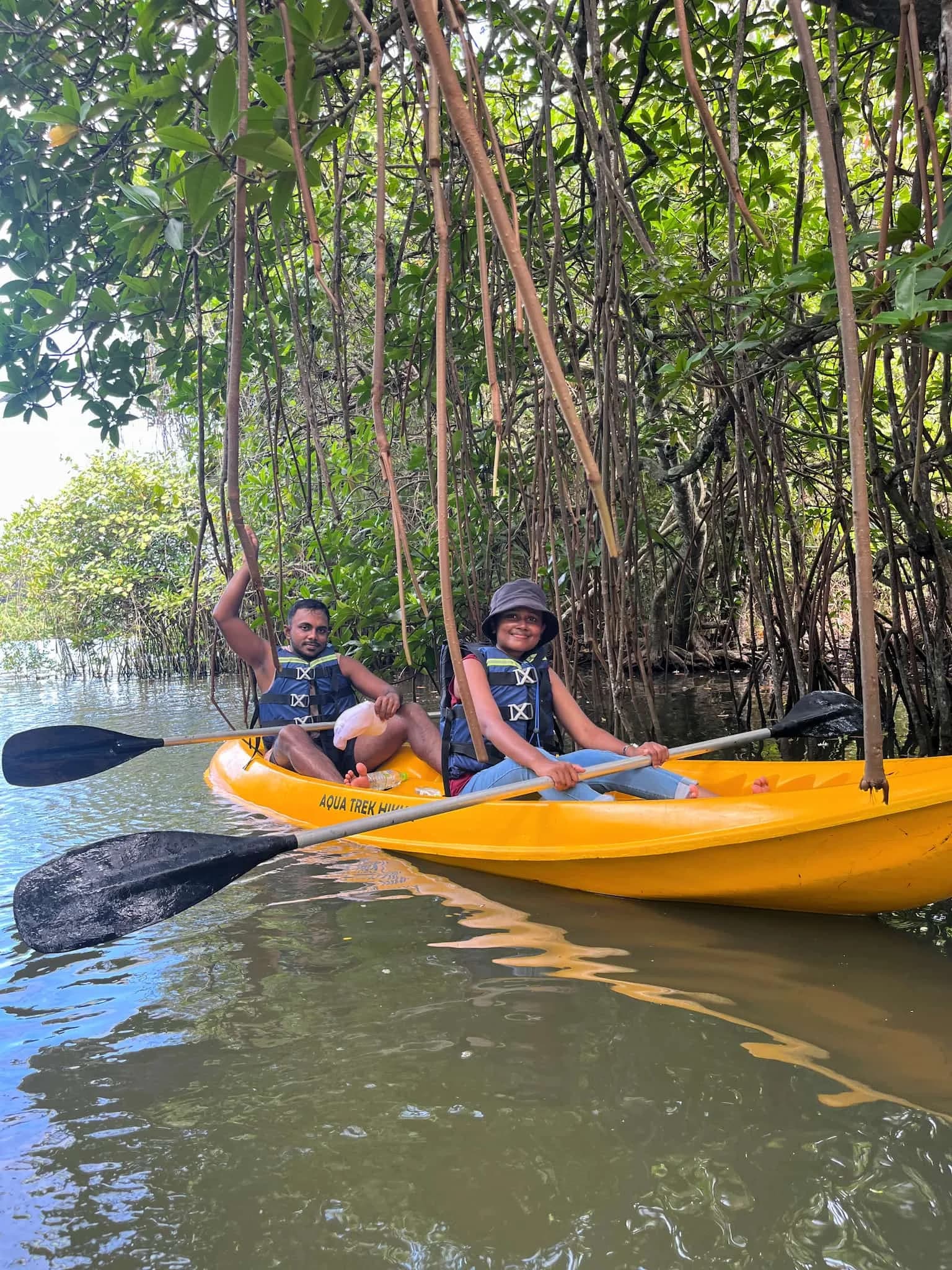
On Rathgama Lake, you still see this on any morning kayak tour. A fisherman in a low wooden canoe, paddling without a sound, pausing to read the water before the net goes out in a wide arc and comes back in with small silver fish. The technique is so efficient and the canoe so quiet that the birds barely react — the herons continue hunting within five metres of a skilled fisherman, treating him as part of the landscape.
This continuity is not nostalgia. It is simply that certain ways of doing things on a small, calm lake remain the best ways, regardless of what century it is.
The Ocean in Sri Lankan Cosmology
Sri Lanka's dominant religion, Theravada Buddhism, came by sea — a branch of the Bodhi Tree (under which the Buddha attained enlightenment) was brought to Sri Lanka from India by Sanghamitta, daughter of Emperor Ashoka, around 250 BCE. The tree still grows in Anuradhapura, making it one of the oldest known trees in the world with a verified historical record.
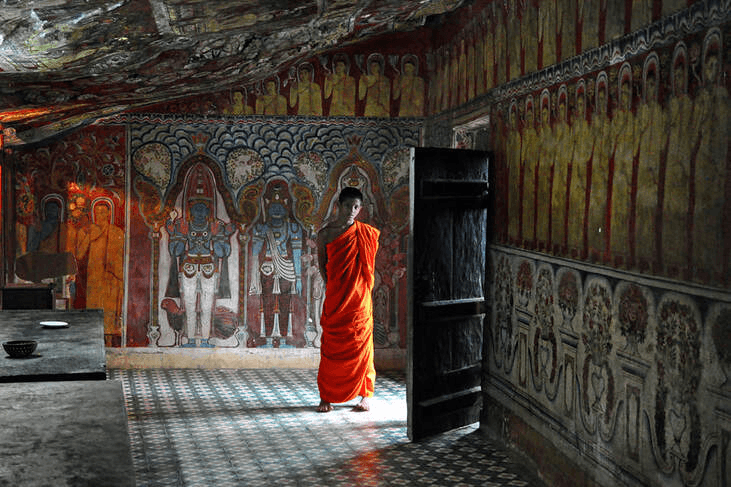
Sri Lankan Buddhism developed a particular relationship with water and islands. The island monasteries — Pidurangala on a rock, the Island Hermitage on Rathgama Lake, the cave temples at Mulgirigala — represent a tradition of seeking spiritual isolation on or above water. The Island Hermitage, founded in 1911 by the German monk Nyanatiloka, continues this tradition: a Buddhist monastery accessible only by boat, on an island in the middle of a brackish lagoon, specifically designed to be separated from the world by water.
When you kayak past the Island Hermitage at sunrise — the robed monks moving quietly on the shore, the sound of the lake, no traffic, no development visible — the connection to this long history of contemplative communities on the island's waters is not difficult to feel.
The 2004 Tsunami and the Coast's Resilience
The Indian Ocean tsunami of 26 December 2004 struck Sri Lanka's southern and western coasts with catastrophic force. Hikkaduwa was among the worst-affected areas: the coastal railway was destroyed (the Matara Express train, carrying approximately 1,500 passengers, was swept off the tracks near Peraliya, just north of Hikkaduwa, in one of the deadliest single tsunami incidents anywhere). Thousands died along the south coast. The physical landscape was rearranged — coral was thrown inland, buildings destroyed to their foundations, the reef temporarily damaged.
Rathgama Lake itself absorbed some of the surge. The mangrove forest on the inland shores, as mangrove consistently does in storm surge events, slowed and reduced the inundation in the areas it protected. The communities that rebuilt on the lake's shores — Dodanduwa, Telwatta — rebuilt on the same land, in the same occupations. The fishing families went back to fishing. The lake recovered.
Today, the coastline shows few visible signs of 2004. The railway was rebuilt. The beach is intact. The reef is growing. This is not resilience as a cliché — it is simply the observable fact that communities with a multi-generational relationship to a place do not abandon it easily.
Coming to the Coast Now
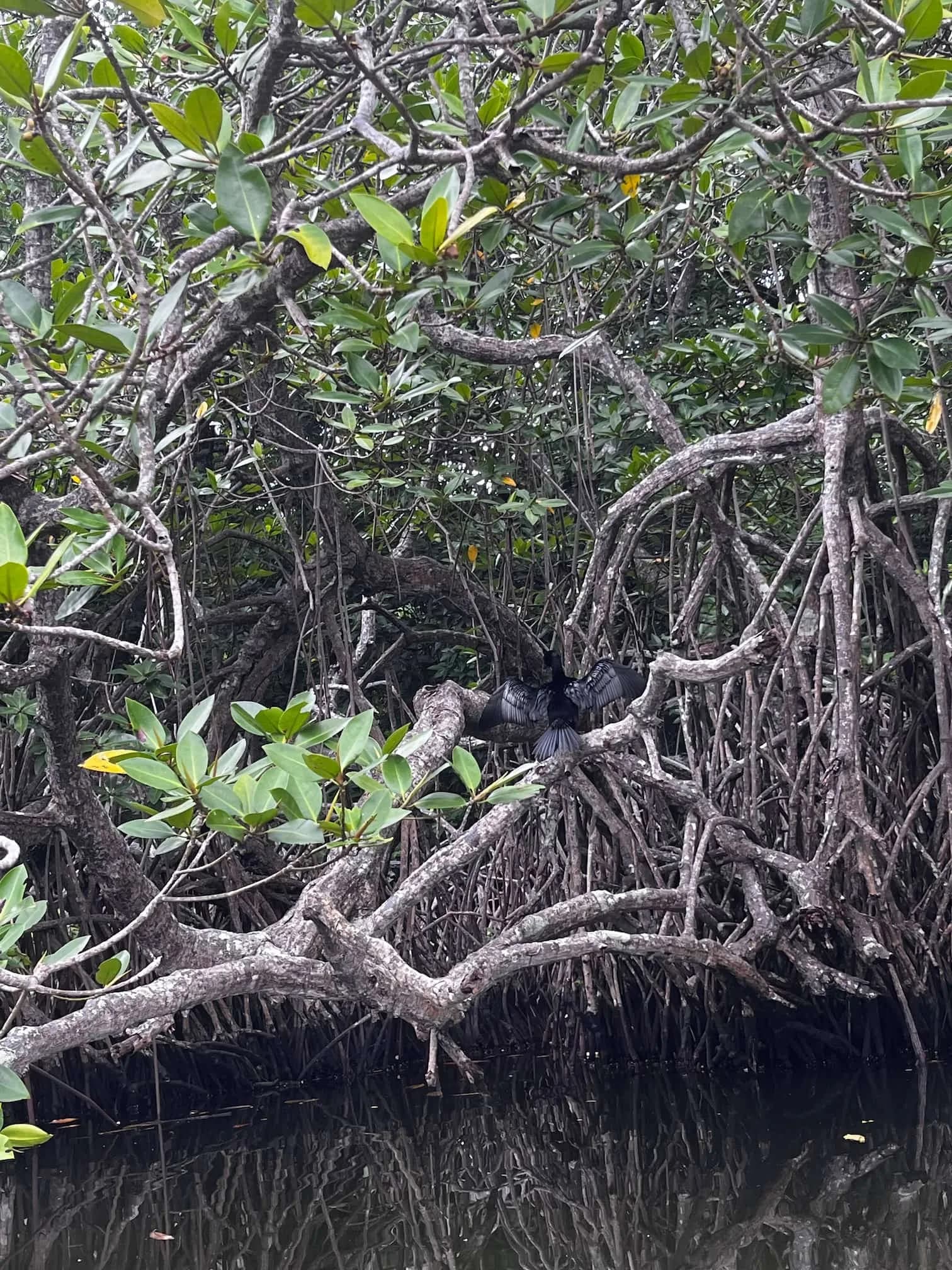
To visit Rathgama Lake in 2026 is to move through a place shaped by all of this. The geometry of the lake — the mangrove channels, the open water, the island in the middle — has not changed. The fishermen are the inheritors of a technique refined over centuries. The birds that kingfishers, herons, and monitors work their way through the mangrove have been doing so on every morning of the lake's existence.
The AquaTrek sunrise kayak tour takes you through this landscape at the hour when it is most itself: dawn on the water, before the day gets loud. It is, among other things, a way of spending a couple of hours inside a history that most visitors to Sri Lanka never quite reach.