Traditional Fishing Communities of Rathgama
November 10, 2024 · by AquaTrek
Before the kayak tours and the nature guides, there were the fishers. The families who have worked Rathgama Lake for generations shaped the lake as much as the monsoons did — their selective harvesting, their knowledge of fish behaviour, their understanding of which channels to work and when, represents centuries of accumulated ecological intelligence that no field guide can replicate.
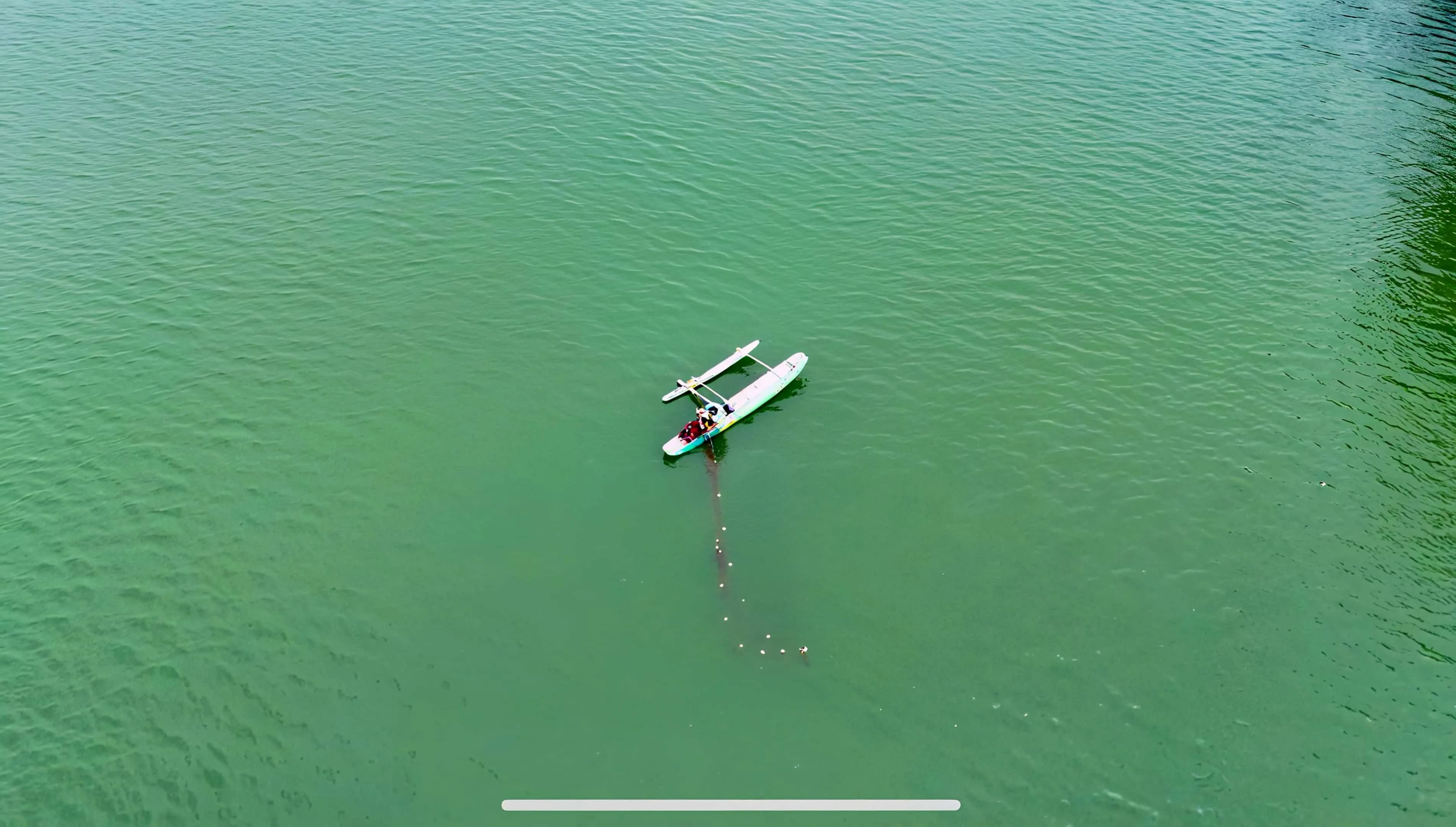
Paddling the lake in the early morning, you will encounter them. A man in a narrow wooden canoe, a cast net folded in his lap, watching the water's surface. A woman hauling a small crab trap from a mangrove channel. A group of men at dawn pulling a seine net through the shallows in a long, coordinated arc. These are not re-enactments. This is how the lake is still fished, today, by families who grew up watching their parents do the same.
The Fishing Techniques
Cast Net Fishing (jalaya) is the most visible method on the lake and the one most associated with Rathgama's fishers in photographs and paintings. A skilled caster can throw a perfectly circular net — often 4–6 metres in diameter — so that it spreads flat and drops in a clean disc over a shoal of mullet or tilapia. The lead weights on the perimeter sink the net edges before the fish react. The catch is gathered as the net is pulled back in.
Cast netting requires years of practice. The net must be coiled precisely in the left hand and the throw must be a single rotational motion. Watching a good cast from a kayak — the net opening in the air like a flower and dropping perfectly flat — is one of the incidental spectacles of a morning tour.
Seine netting is a communal operation. A long net — typically 30–50 metres — is carried out by boat in a sweeping arc while one end is held on the bank by two or three people. The boat circles back, and the entire group hauls both ends toward shore, herding fish into a closing pocket. This method is used for larger catches and requires coordination between 6–10 people. You will occasionally see it in the early morning in the wider, open sections of the lake.
Gill netting uses monofilament nets set overnight and retrieved at dawn. Fish swim into the net and their gills become entangled as they try to back out. Gill nets are typically set in the deeper channels and buoyed with small floats. Local fishers know which channels hold which species at which season — knowledge built through decades of observation rather than scientific sampling.
Cage and basket traps are used for crabs and prawns in the mangrove channels. A cylindrical bamboo or wire trap baited with fish scraps is left near mangrove roots for 12–24 hours. The conical entrance allows entry but prevents exit. Mud crabs (Scylla serrata) and banana prawns are the primary targets. The traps are marked with a stake or coloured rope tied to a mangrove prop root — each fisher knows their markers.
Line fishing from the bank is the everyday activity of the lake's older residents. A simple weighted line with a hook, baited with prawn or small fish, dropped near mangrove root undercuts where larger fish rest. The pearlspot (Etroplus suratensis) — a brackish-water cichlid called karawala locally — is the preferred target: firm, flavourful, and present year-round.
What They Catch
The lake supports a mix of freshwater, brackish, and marine species, reflecting its position at the Gin Ganga river mouth.
Mullet (Mugil cephalus and Liza macrolepis) are the most commercially significant species. Large, schooling fish that browse on algae and detritus in the shallows, they are caught by cast net and seine. Salted and dried mullet is a staple ingredient in Sri Lankan south coast cooking.
Pearlspot / Karawala (Etroplus suratensis) is prized for its taste and tolerates a wide salinity range. This is the fish sold fresh at Rathgama's small lakeside market and served in local restaurants.
Tilapia (Oreochromis mossambicus and hybrids) is an introduced species that has established itself throughout the lake. It is protein-dense and reproduces quickly — useful for subsistence fishing, though its dominance in some areas has reduced habitat availability for native species.
Snakehead (Channa striata) is a predatory freshwater fish that reaches significant size in the lake's upper freshwater reaches. Caught by line or gill net. Its dense, white flesh is valued both locally and in export markets.
Mud crab (Scylla serrata) is the lake's highest-value shellfish. Large specimens — females can exceed 500g — command a premium at Galle's fish market. The species is subject to informal size and season restrictions among the fishing community: small crabs are generally returned, and berried (egg-bearing) females are released as a matter of practical long-term self-interest.
Banana prawns (Penaeus merguiensis) and small shrimp are caught in basket traps and seine nets in the shallower channels. These are sold immediately in Hikkaduwa's restaurants or dried for home use.
The Lunar Fishing Calendar
The most knowledgeable fishers at Rathgama do not work from a fixed weekly schedule — they work from a lunar calendar. This is not superstition; it reflects the real relationship between tidal cycles and fish behaviour.
The new moon and full moon produce the highest tidal ranges (spring tides). At these times, water flows in and out of the lake's mouth with greater force, carrying nutrient-rich water from the reef system into the brackish interior. Fish feeding increases sharply at the tidal fronts — the mixing boundaries between incoming marine water and resident lake water — and experienced fishers position themselves at these fronts during the two or three hours around high tide.
The days around the half-moon produce the weakest tides (neap tides). Water movement is minimal. Fish are less active and more dispersed, and catch rates typically fall. Fishers use this time for net repair, boat maintenance, and gear preparation.
Most of the older fishers can predict the next high tide to within 20 minutes without a chart or smartphone. They have internalised the 24-hour 50-minute cycle of the lunar tide through years of daily observation.
The Economics and the Pressures
The fishing economy at Rathgama Lake operates largely outside formal markets. Most catch is sold directly at small lakeside stalls or to restaurants in Hikkaduwa, or consumed at home. A successful morning's catch by a skilled cast-netter might produce 5–10 kg of mullet — at LKR 500–700 per kg, enough for a family's daily needs but not a significant surplus.
The pressures on this livelihood are not new, but they are intensifying. Overexploitation in the coastal marine fisheries drives more effort onto the lake. Plastic pollution — particularly monofilament fishing line discarded from commercial operations upstream — entangles native wildlife and degrades gear. Water quality in the channels near the main road deteriorates after heavy rain as runoff carries agricultural chemicals.
The younger generation in fishing families increasingly seeks work in Hikkaduwa's tourist economy — as surf instructors, tuk-tuk drivers, restaurant staff. Whether traditional fishing knowledge will persist into the next generation is an open question.
Tourism and the Fishing Community
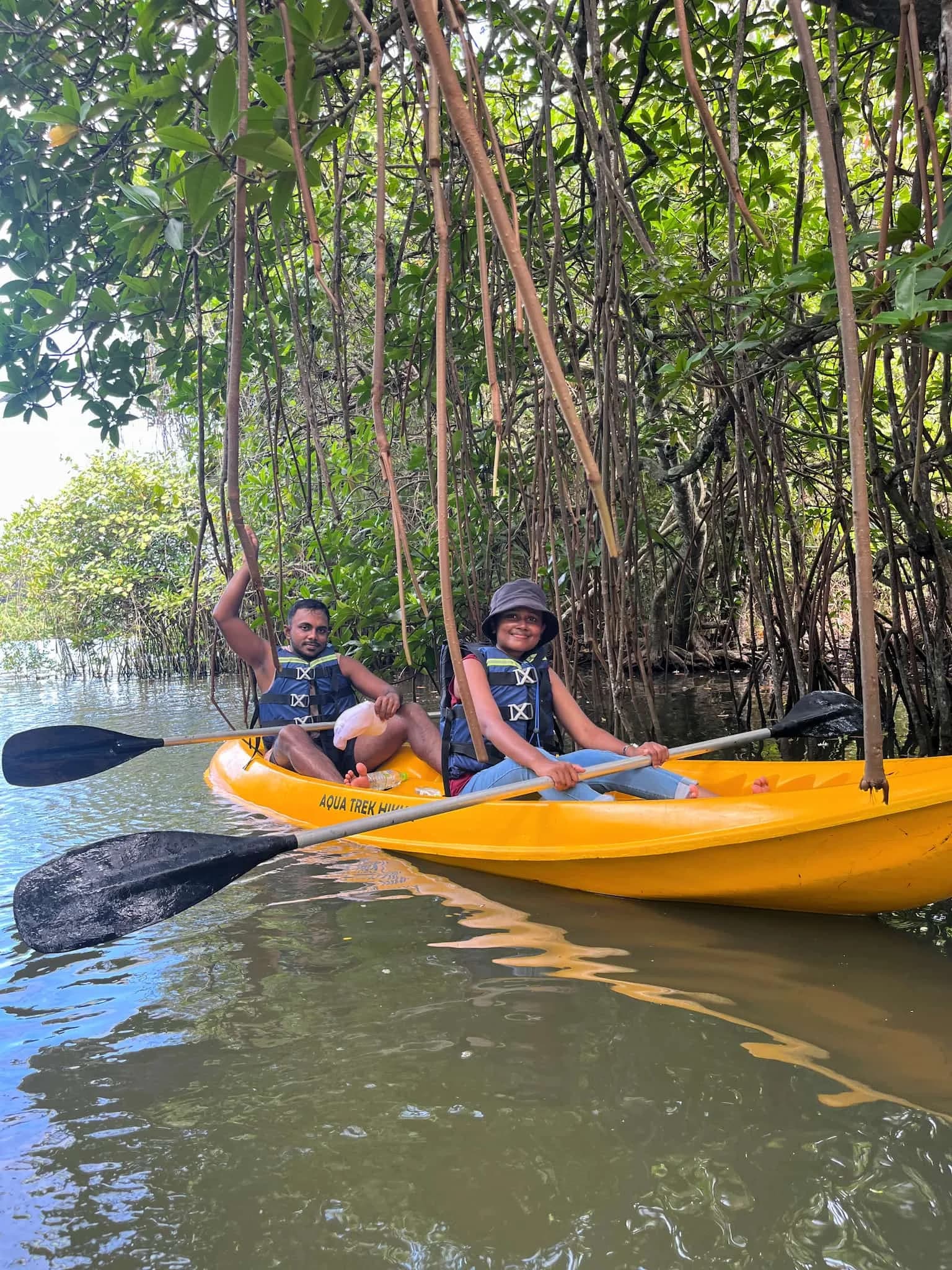
AquaTrek's guides are from Rathgama, and several have family connections to the fishing community. When our kayaks encounter a cast-netter at work in the early morning, guides greet them by name. The relationship between tourism and fishing on the lake is largely complementary — kayaks avoid net-set areas, fishers appreciate that visitors take an interest in their work, and the economic case for keeping the lake healthy is reinforced by both activities.
Guests often ask to watch a cast net thrown up close. When the morning timing and the fishers agree, this is one of the experiences we are most glad to facilitate.