Hikkaduwa sits 98 kilometres south of Colombo on Sri Lanka's southwest coast, and most visitors arrive knowing two things about it: there's a beach and there's a reef. Both are excellent. But the town rewards anyone willing to look a kilometre or two inland, where a completely different world opens up — a brackish lake, a 113-year-old Buddhist monastery on an island, mangrove forests, and some of the best birdwatching in southern Sri Lanka.
This guide covers everything worth doing in and around Hikkaduwa, from the obvious to the genuinely hidden.
1. Kayak Rathgama Lake at Sunrise
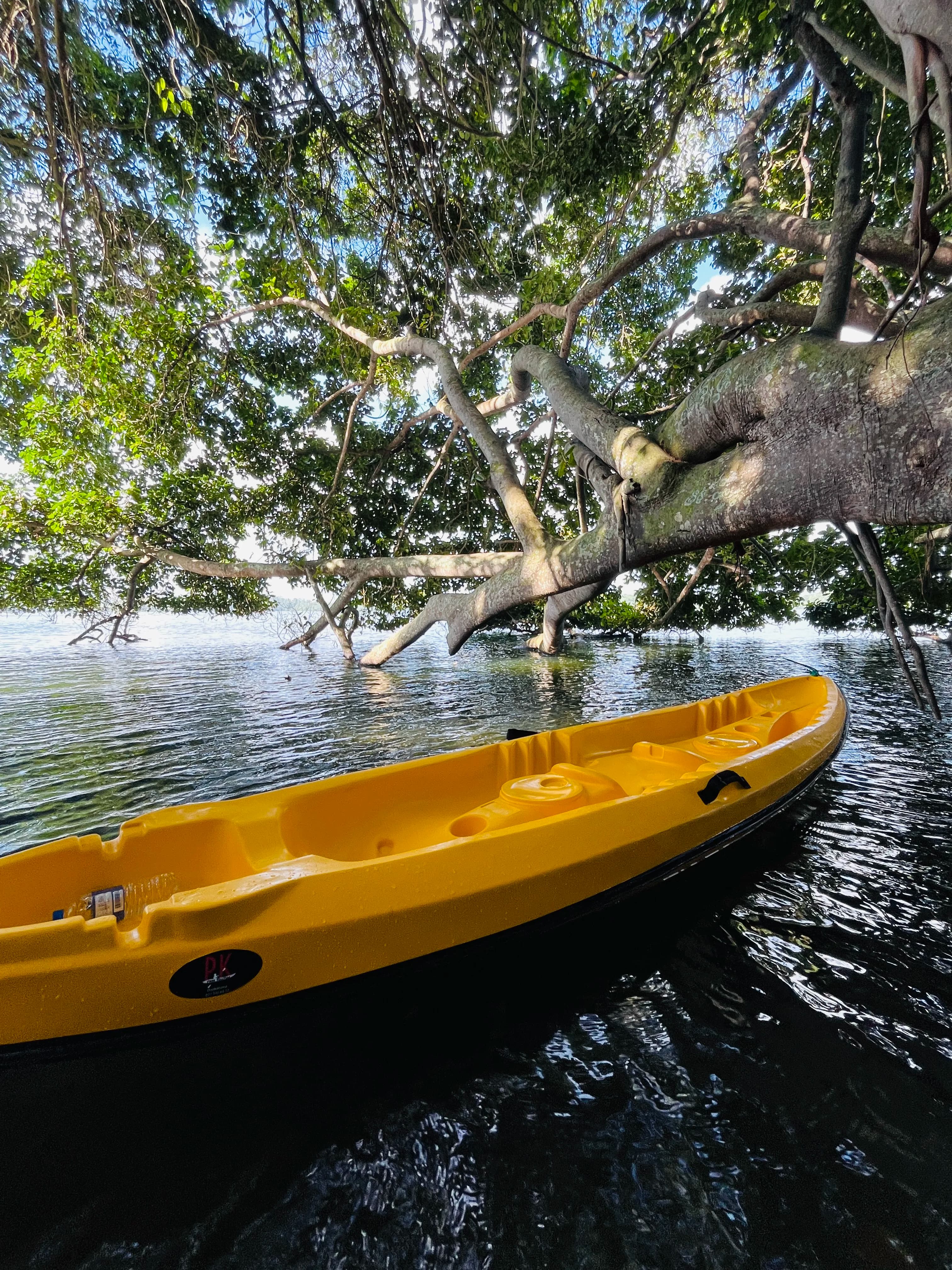
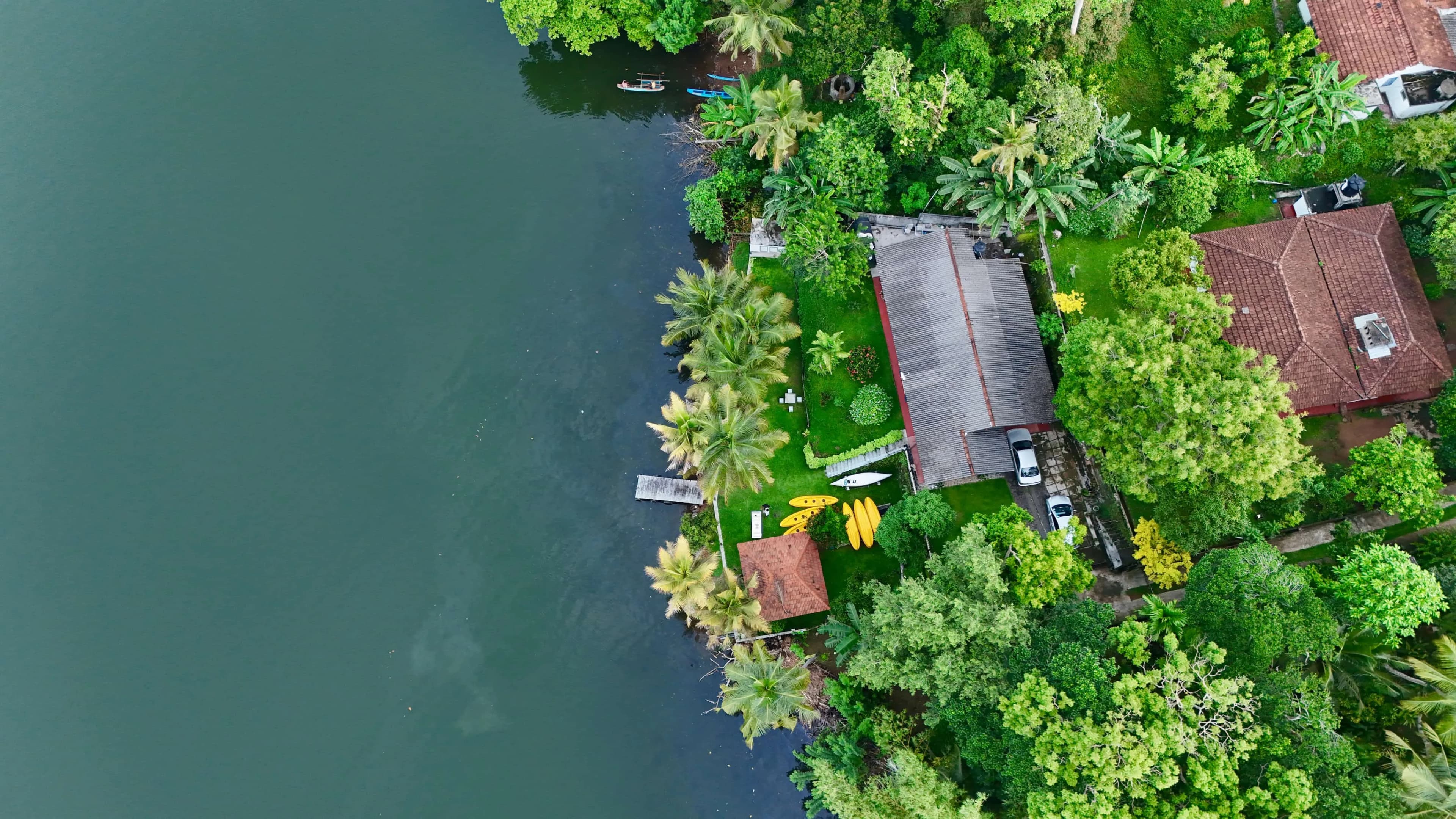
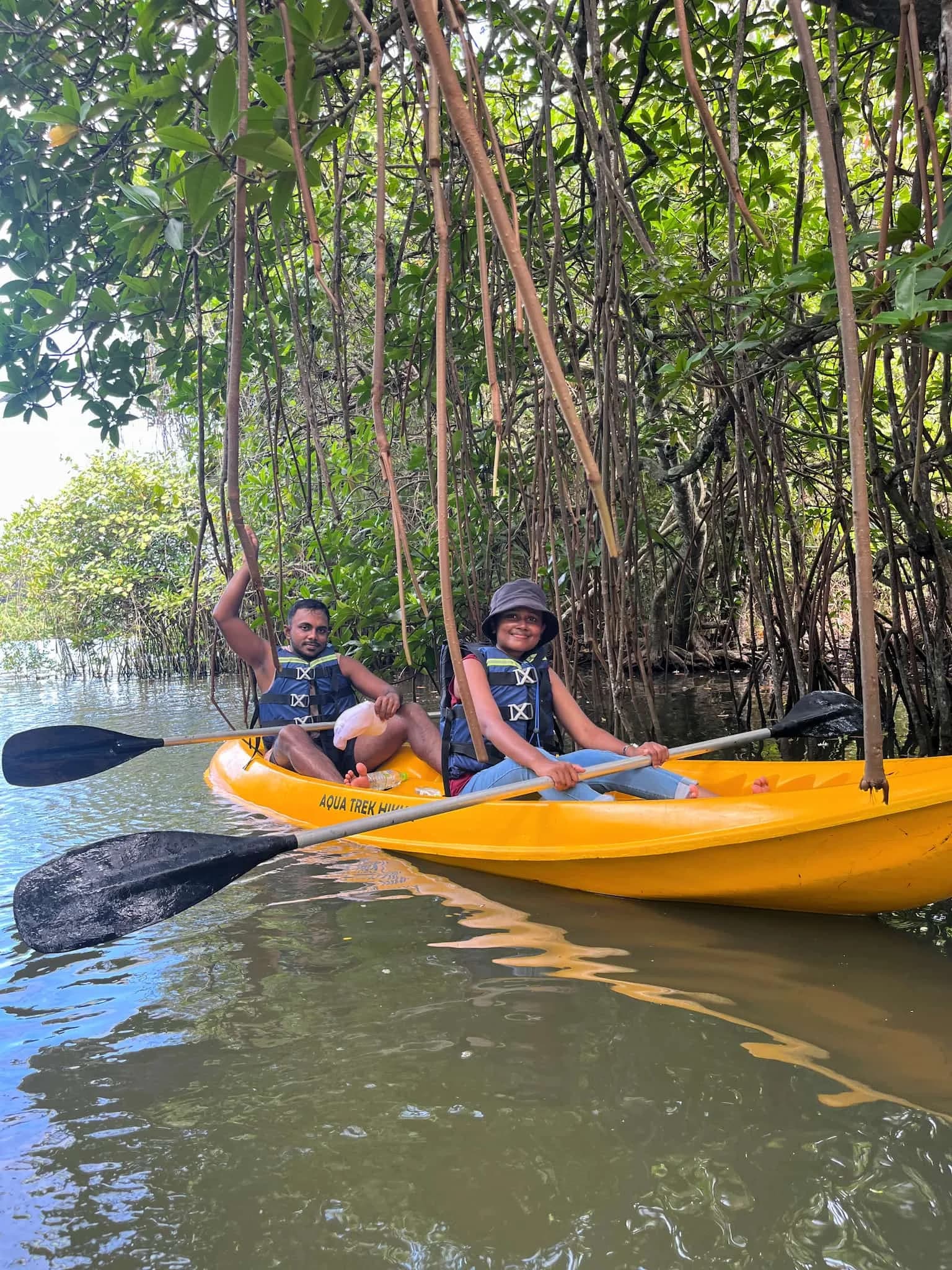
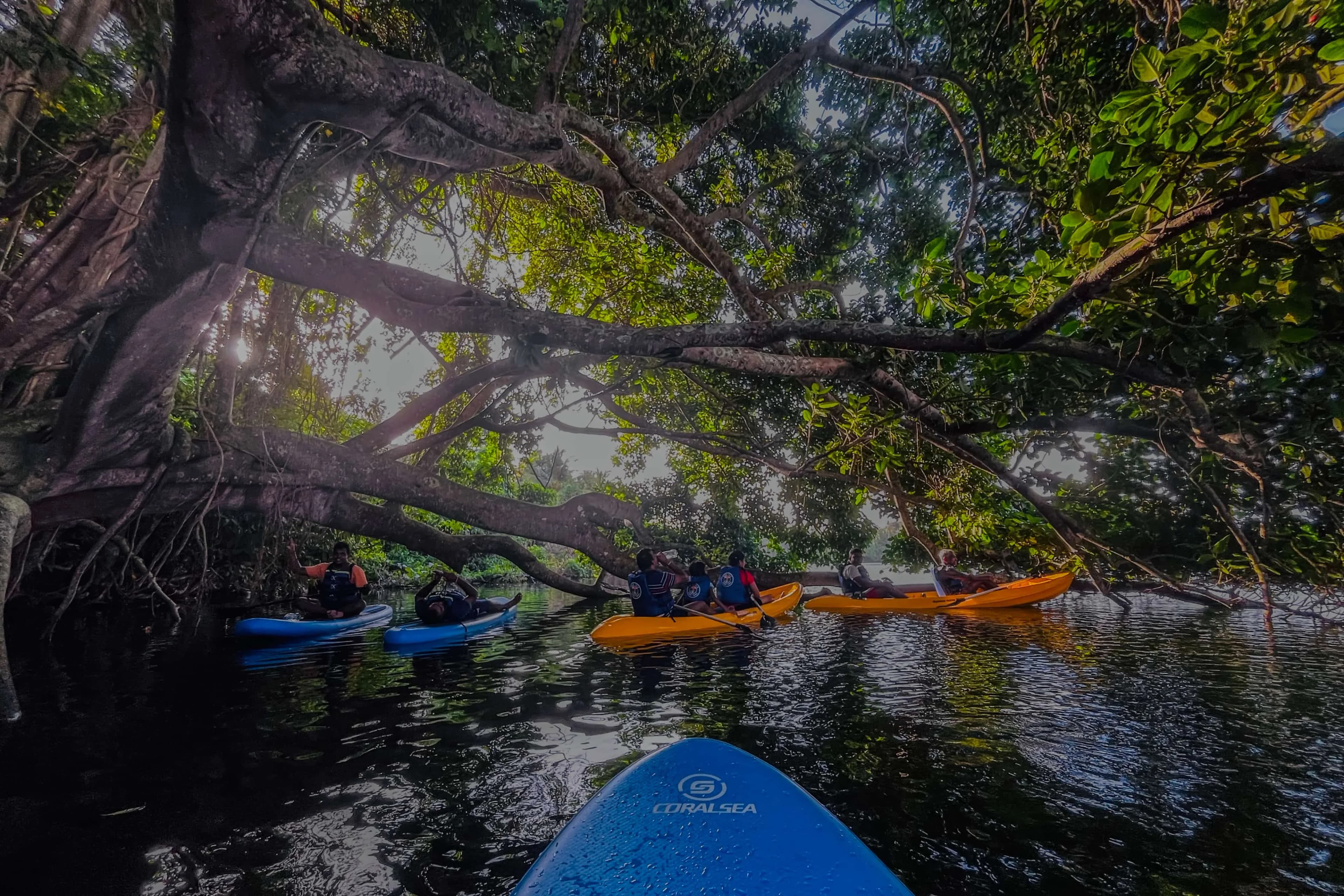
This is the experience most visitors wish they had done first — and booked twice. Rathgama Lake sits immediately behind Hikkaduwa's beach strip, separated from the Indian Ocean by a narrow strip of land. It is a brackish lagoon fed by the Gin Ganga river, fringed by mangrove channels, and home to over 50 bird species.
An early morning kayak with AquaTrek launches at 6 AM and covers the inner mangrove channels, open water, and the shoreline near the Island Hermitage. Kingfishers, Brahminy Kites, Purple Herons, and Water Monitor Lizards are reliably seen. The lake is completely calm at this hour — still water, mist rising, the sound of birds. It is a level of quiet that the beach cannot offer.
Book: AquaTrek Sunrise Wildlife Tour — 2.5 hours, guided, all equipment provided.
2. Snorkel Hikkaduwa Coral Sanctuary
Hikkaduwa National Park is a protected marine reserve directly in front of the main beach, covering approximately 2.79 km² of fringing reef. It is one of the few places in Sri Lanka where you can snorkel directly from the beach into active coral gardens.
The best sections are in front of the Coral Gardens Hotel area, in 1–4 metres of water. Parrotfish, angelfish, and pufferfish are common. The reef took significant bleaching damage in 1998 and 2016 but is recovering well in the northern sections. Avoid the area directly in front of the main beach road — boat traffic keeps it stirred up.
Snorkel gear is available for rent from numerous shops along the main road (around Rs 500 per hour). Glass-bottom boats also operate from the beach if you prefer to stay dry — they are cheaper than snorkelling tours at other Sri Lanka spots and provide a clear view of the fish populations.
Best time: 6–9 AM before boat traffic picks up; November to April for clearest visibility.
3. Watch the Green Turtles Come Ashore
Hikkaduwa's beach is a nesting site for Green Turtles (Chelonia mydas) and Olive Ridley Turtles (Lepidochelys olivacea). Females come ashore at night — primarily between November and April — to lay eggs above the high tide line. Several turtle hatcheries operate along the beach, where eggs are re-buried in protective enclosures and hatchlings are released into the sea.
The hatcheries are free or charge a small donation. Visits during the day let you see hatchlings being held before release. If you want to see a release, ask at any hatchery in the afternoon — most releases happen at dusk. The turtles are not captive long-term; hatchlings are typically released within a day of hatching.
Note: Never approach a nesting female with a torch or camera flash. The hatcheries take conservation seriously; follow their guidance.
4. Surf the Main Break
Hikkaduwa's surf is not world-class, but it is consistent, accessible, and ideal for learners and intermediate surfers. The main break is directly in front of the beach strip, a right-hander that works best at 1–2 metres on a southerly swell. Several reef breaks outside the lagoon produce longer, more challenging waves for experienced surfers.
Surf schools operate along the main road and charge around Rs 3,000–4,000 for a 1.5-hour beginner lesson including board and instructor. The season runs from November to April (northeast monsoon keeps the water calm). The southwest monsoon (May–September) brings larger, messier swells better suited to experienced surfers.
5. Explore Hikkaduwa Lake by Boat
If kayaking is not for you, traditional wooden fishing boats operate gentle tours of Rathgama Lake. These are slower, more passive alternatives — you sit back while a local fisherman navigates the lake. They lack the wildlife access of a kayak (motorboat noise pushes birds away) but offer a cultural dimension: the fishermen often explain their nets and catches, and the lake at a walking pace still reveals herons, egrets, and the mangrove edge.
Independent boat hire is available from the main lagoon access point near the old bridge. Negotiate a rate beforehand — a one-hour tour should be around Rs 2,000–3,000.
6. Visit the Island Hermitage
One of the most significant Buddhist monasteries in the 20th century sits on a small island in Rathgama Lake, accessible only by boat. The Island Hermitage was founded in 1911 by German-born monk Nyanatiloka Mahathera and became a centre of Theravada Buddhism for Western monks. Nyanaponika Thera wrote The Heart of Buddhist Meditation here. Ñāṇamoli Thera completed his Pali translations here.
The monastery is still active and receives visitors most mornings. The crossing takes about 10 minutes from Rathgama town. Dress modestly (shoulders and knees covered), bring a small offering if you wish, and move quietly through the grounds. The library contains original manuscripts and is one of the more extraordinary rooms in southern Sri Lanka.
Admission is free. The boat crossing costs around Rs 300–500.
7. Day Trip to Galle Fort
Galle Fort is 19 kilometres south of Hikkaduwa — a 30-minute drive or bus ride. It is one of the best-preserved colonial fortifications in Asia, a UNESCO World Heritage Site since 1988, and genuinely worth half a day.
The fort was built by the Dutch in the 17th century on an existing Portuguese fortification. Within its walls: the Dutch Reformed Church (1755), the old lighthouse (still active), narrow flagstone streets, boutique shops, art galleries, and some of the finest restaurants on the south coast. The ramparts offer a panoramic view of the Indian Ocean and are especially beautiful at sunset.
Getting there: tuk-tuks charge around Rs 1,500–2,000 each way. Buses leave from Hikkaduwa junction frequently and cost under Rs 100.
8. Walk the Beach at Sunset
Hikkaduwa's beach is widest and most beautiful at the northern end, beyond the tourist strip. Walk north from the main beach road for about 15–20 minutes and the crowd thins quickly. The beach becomes a long, uninterrupted sweep of golden sand backed by coconut palms.
Evening light here — roughly 5:30–6:30 PM depending on the season — is exceptional. The Indian Ocean turns copper, fishing boats silhouette against the sky, and the beach is quiet enough to walk for 20 minutes without passing another tourist. This is the Hikkaduwa most visitors leave without finding.
9. Eat Local
Hikkaduwa has no shortage of restaurants, but the best food tends to be in the smallest kitchens. Look for:
Rice and curry: Sri Lanka's national dish, served at its best in small family-run "rice and curry" places away from the beachfront. A full plate — typically 5–8 curries, sambol, and rice — costs under Rs 500. Ask your tuk-tuk driver where locals eat.
Fresh seafood: The catch from Rathgama Lake and the offshore fishing boats reaches local restaurants within hours. Grilled mullet, devilled prawns, and crab curry are the standouts. Beachfront restaurants are convenient but usually cost 2–3× more than inland equivalents.
Kottu roti: The rhythmic chopping of kottu roti on a flat iron is one of the sounds of a Sri Lankan night. Roti chopped with egg, vegetables, and spices — a late-night staple and an unavoidable experience.
10. Take a Canoe Safari on Koggala Lake
Koggala Lake is 14 kilometres east of Hikkaduwa — a 20-minute tuk-tuk ride. It is larger than Rathgama and famous for its cinnamon-growing island and resident communities of flying foxes. Boat tours run from the main jetty and typically include a stop at the cinnamon processing facility where you can watch the bark being harvested and rolled.
The lake also has stilt fishermen — the iconic image of southern Sri Lanka, men perched on poles above the water — though most are now posing for tourist photographs rather than actively fishing. Worth a quick visit but manage expectations.
Combine with: a stop at the Brief Garden on the way back — the childhood home of landscape architect Bevis Bawa, 6 kilometres north of Koggala.
Practical Information
Getting around: Tuk-tuks are the standard local transport. Negotiate before getting in; most trips within Hikkaduwa should be Rs 200–400. Scooter rental is available for around Rs 2,500 per day if you are comfortable riding Sri Lankan roads.
When to visit: November to April is the dry season on the south coast. March and April get hot. December to February is ideal.
Cash: Most small restaurants and hatcheries are cash-only. ATMs on the main road accept international cards.
Connectivity: Most restaurants and all hotels have WiFi. If you need mobile data, a local SIM from Dialog or Mobitel costs around Rs 500 with a 10 GB data package.