Southern Sri Lanka: The Complete Travel Guide
By AquaTrek · Hikkaduwa locals
Southern Sri Lanka is a distinct world from the ancient capitals of the north. Where the Cultural Triangle (Anuradhapura, Polonnaruwa, Sigiriya) offers ruins, history, and dry-zone landscape, the south delivers coastline, living culture, extraordinary wildlife, and a relaxed pace that the north's heritage circuit rarely allows. The two regions are complementary; most visitors who come to Sri Lanka for more than a week will want to spend time in both.
This guide covers the southern coast from Colombo to the far southeast, including the Galle Coast, the whale-watching grounds off Mirissa, the elephant country at Udawalawe, and the leopard stronghold of Yala. It also covers the practical side: how to get here, how to move around, when to come, and where to base yourself for different parts of the region.
The Southern Coastal Corridor
The main artery of the south is the coastal A2 highway from Colombo to Matara, and the railway line that runs parallel to it, often within metres of the ocean. Together, they connect the major beach towns of the west-facing coast: Bentota, Hikkaduwa, Galle, Unawatuna, Weligama, and Mirissa — before the road turns inland toward Matara and beyond.
The distances are smaller than they feel on a busy day: Colombo to Galle is 120 km, Galle to Matara 45 km. But the road through Hikkaduwa on a busy December afternoon can take twice as long as the same drive at 6 AM. The train is almost always faster and considerably more pleasant — the coastal railway between Colombo and Matara is consistently ranked among the most scenic rail journeys in Asia.
Galle Fort
Galle is the undisputed centre of gravity for the south coast, and Galle Fort is the reason. A walled city on a peninsula jutting into the Indian Ocean, originally built by the Portuguese in 1588 and comprehensively rebuilt by the Dutch between 1649 and 1663, the Fort is now a UNESCO World Heritage Site and one of the best-preserved colonial citadels in Asia.
The Fort is best explored on foot. The ramparts can be walked in their entirety — approximately 1.5 km, with unobstructed ocean views — and the interior is a dense grid of Dutch-era streets containing churches, a mosque, a lighthouse, law courts, a national museum, and hundreds of period buildings now housing boutique hotels, restaurants, galleries, and shops.
The Dutch Reformed Church (1755) is the oldest Protestant church in Sri Lanka and still holds services. The Groote Kerk — the Great Church — has memorial stones set into its floor commemorating VOC officials and their families, the names worn smooth by three centuries of foot traffic. The adjacent Dutch Hospital has been restored as a commercial complex.
Practical: The Fort is about 3 km from Galle town's railway station — tuk-tuk or 30-minute walk. Allow a minimum of half a day; a full day if you intend to eat inside the Fort. Evening on the ramparts at sunset, with the lighthouse active and the ocean below, is reliably beautiful.
Hikkaduwa
Hikkaduwa sits 30 km north of Galle along the coast and has a completely different character: less elegant, louder, younger, and in some ways more honest about what it is — a beach town built for travellers who want surf, reef, and a cold beer after a long day.
The coral reef sanctuary in front of the main beach is a protected marine reserve accessible directly from shore — one of the few places in Sri Lanka where you can snorkel on an active reef without taking a boat. Parrotfish, angelfish, and pufferfish are reliably seen in 1–4 metres of water.
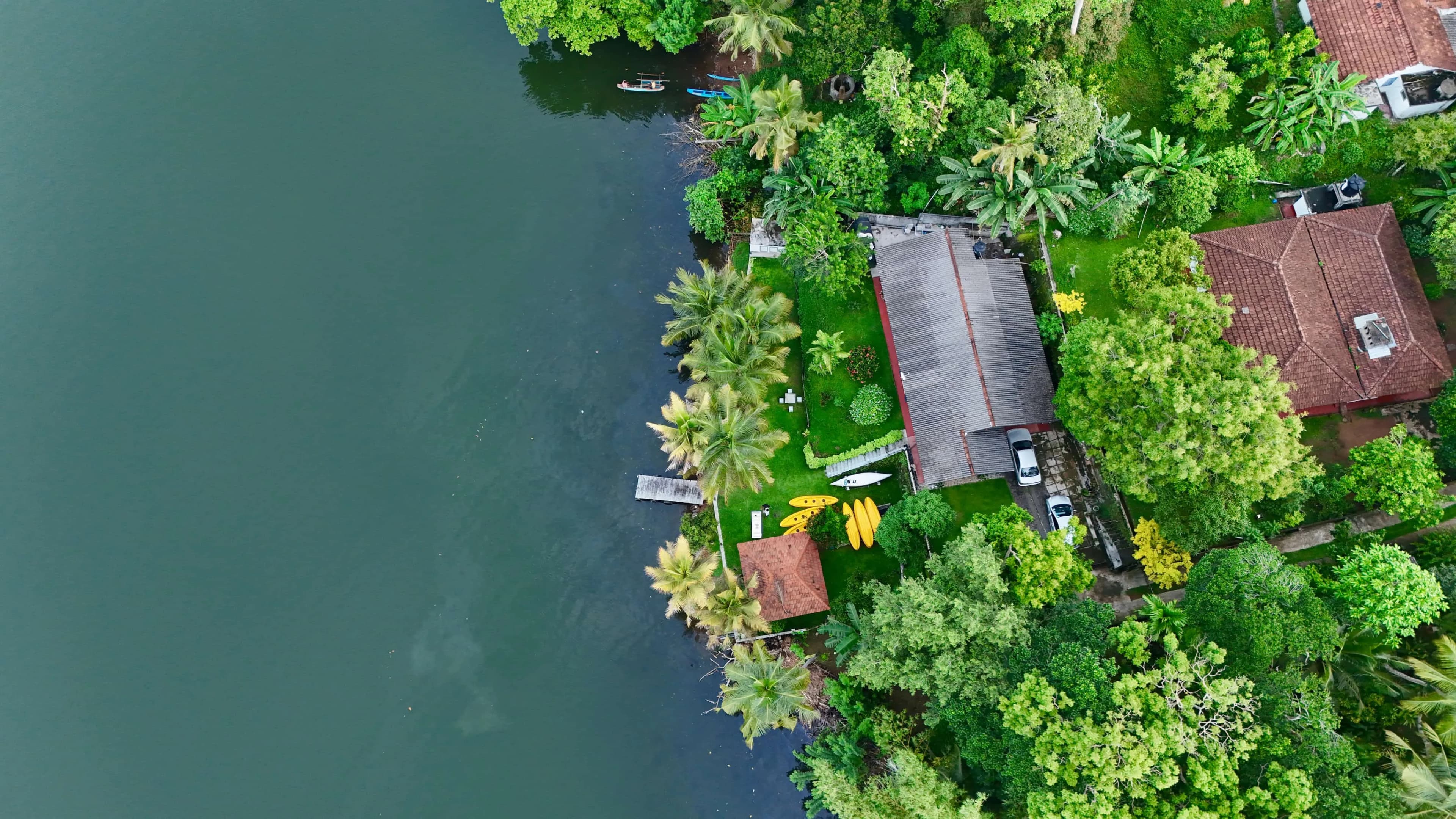
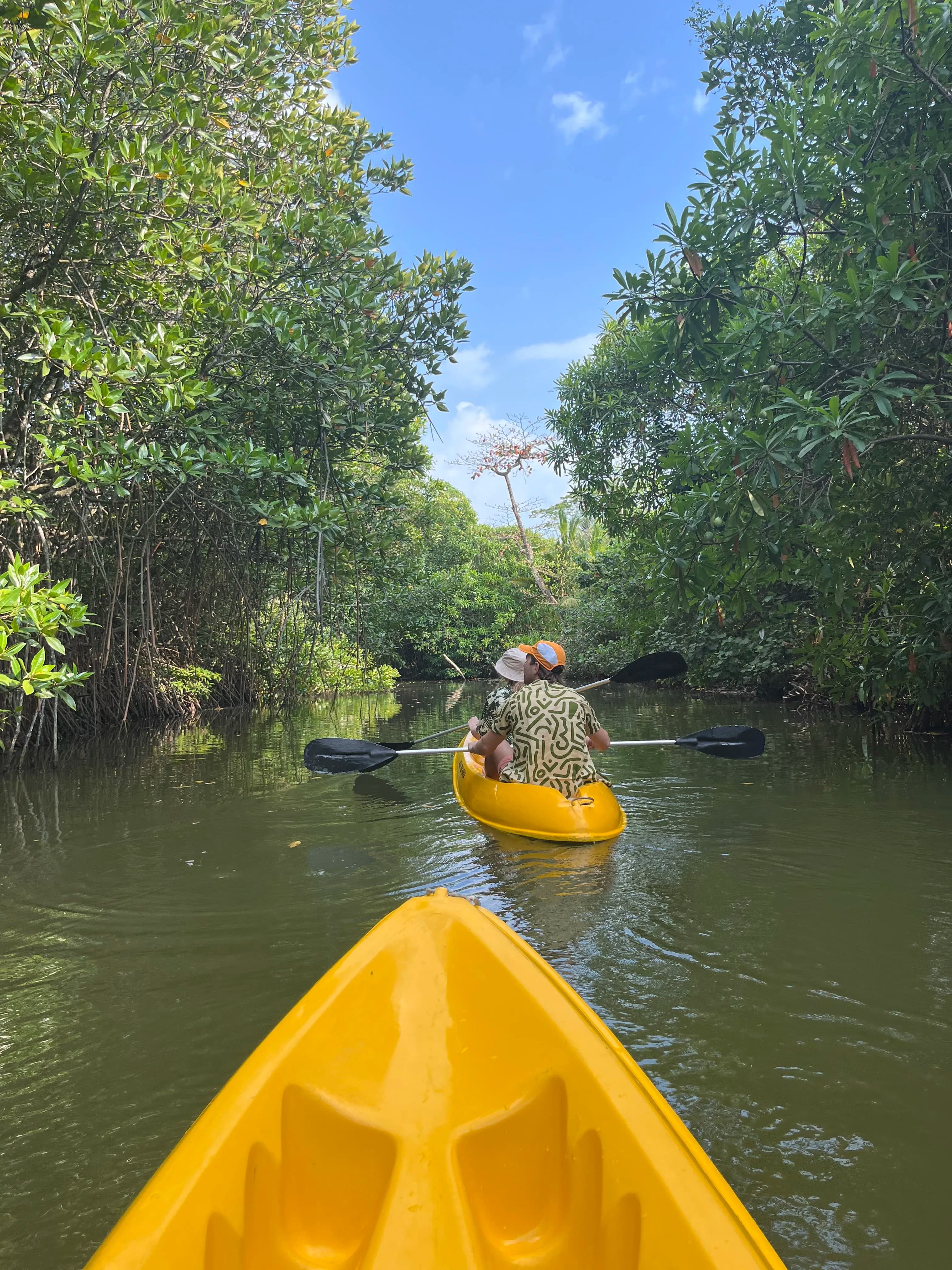
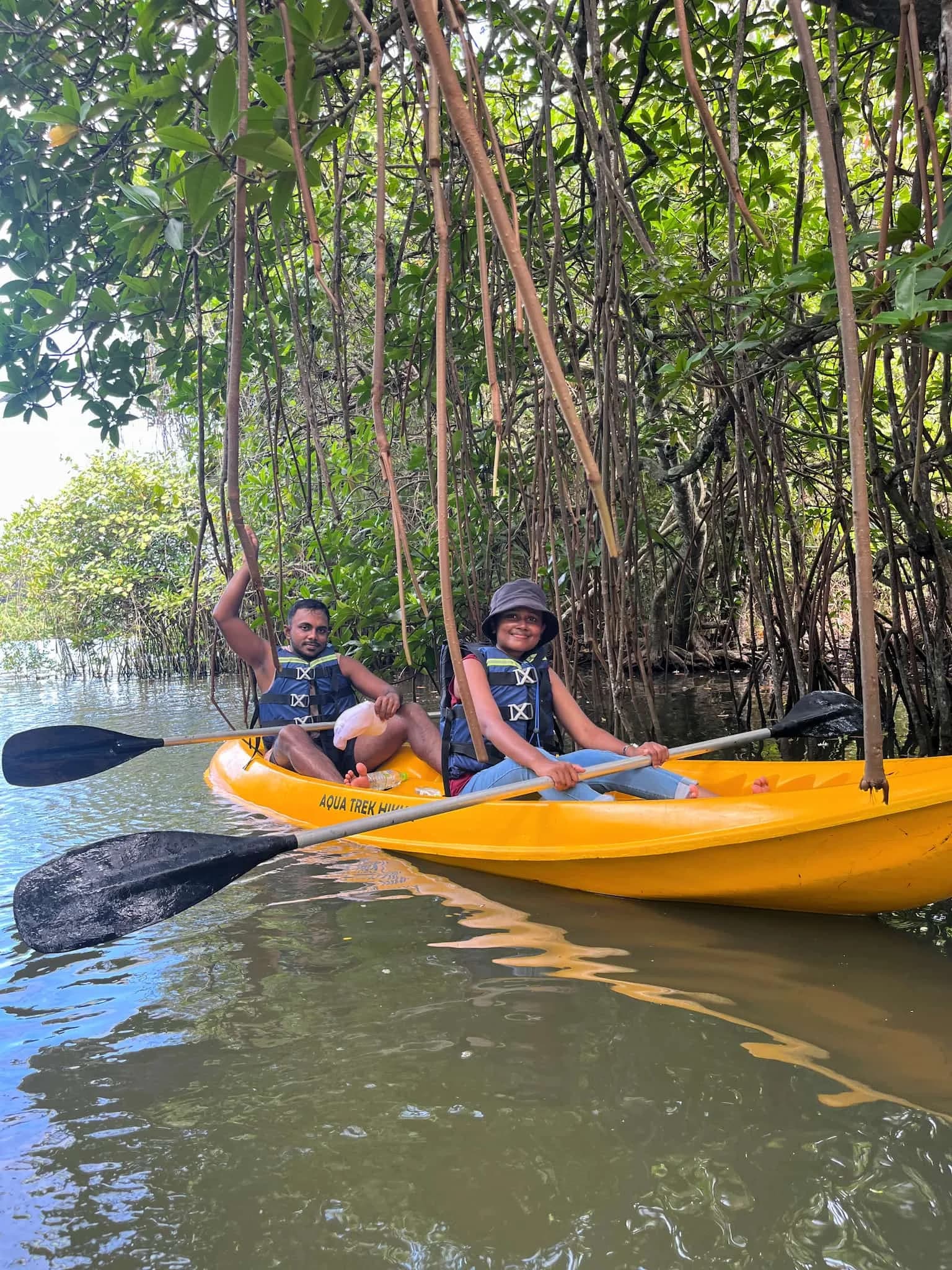
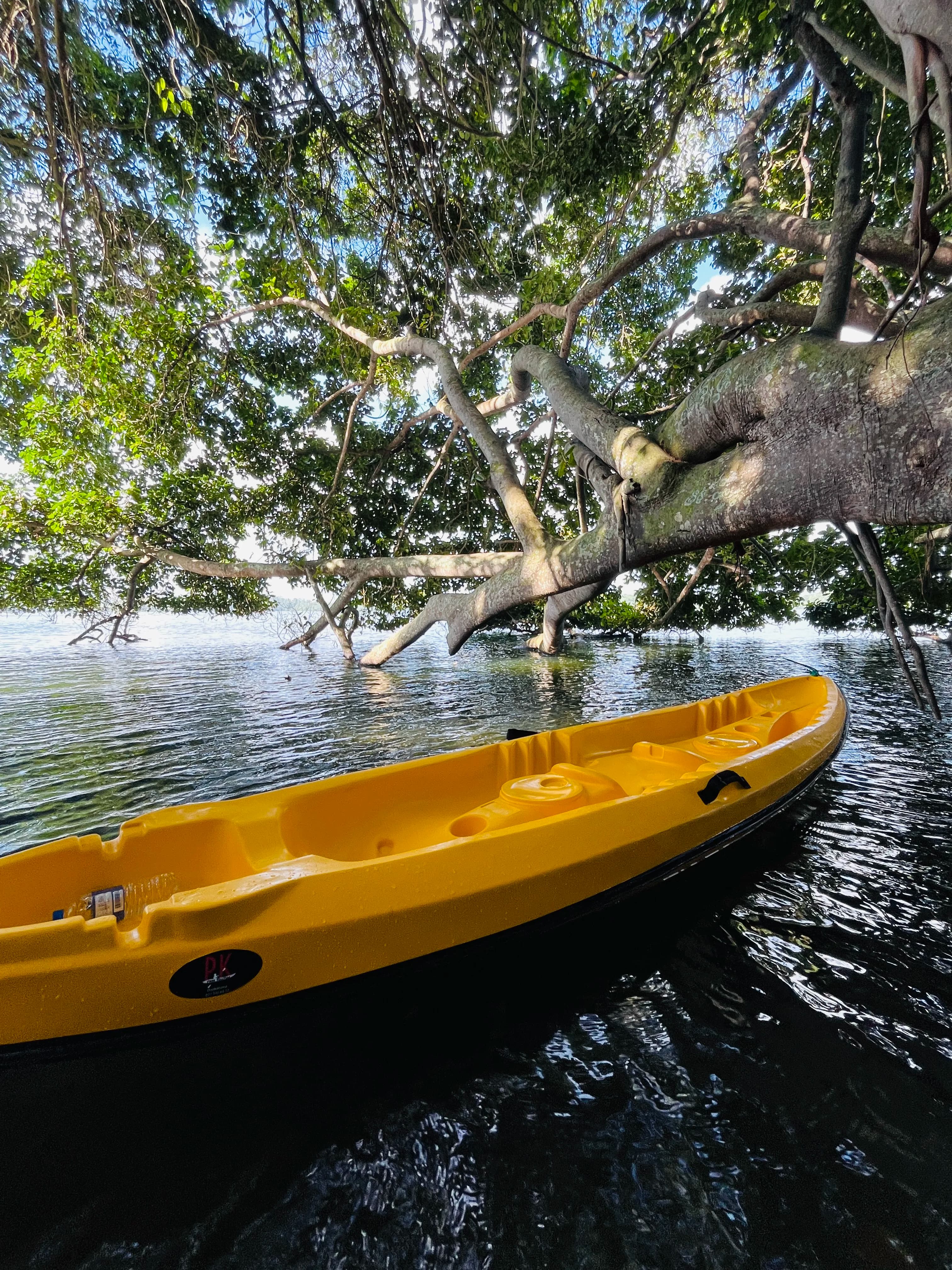
What Hikkaduwa's beach reputation obscures is Rathgama Lake, 5 km inland. The lagoon — calm, mangrove-fringed, and teeming with wildlife — is completely unlike anything on the beach side. AquaTrek's kayak tours launch from the lake shore at dawn, when kingfishers and herons are most active. It is, for many visitors, the best single experience they have on the south coast. Book the Sunrise Wildlife Tour here.
Practical: Hikkaduwa has the south coast's densest concentration of budget accommodation. It is a good base for day trips to Galle, Unawatuna, and Rathgama Lake.
Unawatuna and Weligama
Unawatuna is a small bay 5 km south of Galle Fort with a sheltered, curved beach and calm water — better for swimming than Hikkaduwa's more exposed shore. The bay is lined with restaurants and guesthouses. It feels like a quieter, slightly more grown-up version of Hikkaduwa.
Weligama (25 km east of Galle) has a wide, open bay and the best surf for beginners on the south coast. The wave is long, consistent, and forgiving — surf schools operate along the beach and equipment hire is cheap. Weligama is also where you start to see stilt fishermen working the surf — the petta sites begin just outside the town.
Mirissa and Whale Watching
Mirissa is a small bay 35 km east of Galle that has become Sri Lanka's most important whale watching departure point. From November through April, the shelf off Mirissa passes beneath the migration route of Blue Whales (Balaenoptera musculus) — the largest animals on earth — moving between their feeding grounds in the Bay of Bengal and breeding areas further south.
Sightings are not guaranteed, but success rates during peak season (January–March) run above 80% in most years. Sperm Whales, Bryde's Whales, and Spinner Dolphins are also regularly seen. The trips depart at around 6:30 AM and return by early afternoon — a half-day out of whichever base you are using.
Important: Mirissa has a significant problem with irresponsible whale watching operators who approach whales too closely, use multiple boats simultaneously, and interfere with feeding behaviour. Choose an operator that is certified by the Department of Wildlife Conservation and adheres to the 100-metre minimum approach distance. The quality of the experience and the welfare of the animals both depend on it.
Practical: Mirissa can be visited as a day trip from Hikkaduwa or Galle. The beach town itself is small, and most visitors come specifically for whale watching rather than extended stays.
The Interior: Udawalawe and Yala
The south coast's beach towns are only half the story. The interior, 50–80 km inland, contains two of Sri Lanka's most important national parks.
Udawalawe National Park
Udawalawe is the most reliable place in Sri Lanka — possibly in Asia — to see wild elephants. The park was established in 1972 around the Udawalawe Reservoir, and the open, sparse grassland surrounding the water supports a resident elephant population estimated at 600–700 animals. Unlike in Yala, where elephants are present but not the primary attraction, Udawalawe is specifically an elephant park and elephant sightings are near-certain on any morning or evening safari.
Herds of 20–50 elephants are regularly seen at the reservoir edges in the early morning. Bull elephants in musth (the periodic hormonal state associated with heightened aggression and breeding) are present year-round. Calves are commonly seen with family groups.
The park is also home to Sri Lanka's largest wild buffalo (Bubalus arnee) population, spotted deer, water monitor lizards, crocodiles, and over 200 bird species including Sri Lankan junglefowl (the national bird), painted storks, and various raptors.
Getting there: 90 km north of Matara, approximately 3 hours from Hikkaduwa or Galle. Day trips are possible but tiring — an overnight stay at a lodge near the park allows both morning and evening game drives.
Yala National Park
Yala is Sri Lanka's most visited national park and has the highest density of leopards (Panthera pardus kotiya — the Sri Lanka subspecies) of any protected area in the world. Leopard sightings are the primary draw, and success rates during peak season are high by the standards of any leopard-watching destination.
The park is divided into blocks. Block 1, which is open to visitors, covers 141 km² of scrub jungle, grassland, lagoons, and coastal dune. Sloth bears, elephants, spotted deer, wild boar, crocodiles, and hundreds of bird species share the habitat with the leopards. The coastal section of the park includes beaches where nesting sea turtles come ashore between October and April.
Yala is 170 km from Hikkaduwa — a long day's drive. It works best as a 2–3 night stay at one of the lodges outside the park boundary, combining morning and evening game drives. It can also be combined with a visit to Udawalawe as part of a southern loop.
Note on crowds: Yala suffers from overcrowding during peak season (November–January, Sri Lankan school holidays). The concentration of jeeps around leopard sightings can be significant and detracts from the experience. Consider the shoulder seasons (February–March, October–November) for a less pressured visit.
The Far Southeast: Arugam Bay and Lahugala
For travellers willing to push further east, the road from Yala eventually reaches Arugam Bay on the east coast — Sri Lanka's most serious surf destination, consistent from May through September (opposite season to the south coast). Arugam Bay is a different culture from the south: quieter, less developed, with a strong Tamil population in the surrounding villages and a different, spicier food culture.
Lahugala National Park, between Yala and Arugam Bay, is a small and undervisited reserve with extraordinary elephant concentrations — herds of 100+ animals are sometimes seen at the Lahugala tank — and almost no other visitors.
Getting Around the South
By train: The coastal line from Colombo Fort to Matara is the backbone of the south coast. Trains run frequently, are significantly cheaper than taxis, and offer ocean views from the right-hand side of the carriage (travelling south). The railway does not reach Yala or Udawalawe — you need road transport for the interior.
By tuk-tuk: For local movement within towns and short hops between adjacent towns, tuk-tuks are the standard option. Negotiate the fare before departure or use a metered tuk-tuk app (PickMe, Uber). Typical rates: Rs 200–350 for a 5 km trip.
By hired car with driver: For interior destinations (Udawalawe, Yala) or for travelling with luggage, a hired car with driver is the most practical option. A full day's hire typically runs Rs 7,000–12,000 depending on distance.
By motorcycle: Motorcycle hire is available in Hikkaduwa, Galle, and most tourist towns. The coastal road between Galle and Mirissa on a quiet morning is one of the genuinely enjoyable rides in Sri Lanka. The interior roads are unpaved in some sections — check the route before going.
When to Go
The south coast's best season is November through April, when the southwest monsoon has ended and the northeast trade winds bring dry, clear weather to the west-facing coast. December and January are peak season, with the highest prices and most visitors. February through April offers good weather with fewer crowds.
May through September is the southwest monsoon period. Rain is regular but not continuous — mornings are often clear, rain typically builds through the afternoon. The coast can be rough for swimming and snorkelling. Whale watching pauses. But Hikkaduwa's beach accommodation empties significantly, prices drop, and for wildlife tourism (Yala, Udawalawe), conditions can be excellent.
October is the inter-monsoon transition: unpredictable weather, but improving through the month. The first migrant birds arrive on the lagoons from mid-October.
Practical Information
Visa: Most nationalities require a visa, available as an Electronic Travel Authorisation (ETA) online before departure. The standard tourist visa is 30 days, extendable to 90 days at the Department of Immigration.
Currency: Sri Lankan Rupee (LKR). Cash is necessary outside of Colombo and major hotels. ATMs are available in Hikkaduwa, Galle, Matara, and main towns. Dynamic currency conversion (paying in your home currency) should be declined — the rates are poor.
Health: No mandatory vaccinations, but hepatitis A, typhoid, and tetanus updates are recommended. Malaria risk is low in the southern tourist zone but present in some parts of the interior. Dengue fever is present island-wide — mosquito repellent is important.
Safety: Sri Lanka is generally safe for tourists. The civil conflict, which ended in 2009, did not directly affect the southern tourist areas. Exercise standard precautions with valuables on beaches and in crowded public transport.
Language: Sinhala in the south, Tamil in the north and east. English is widely spoken in tourist areas, hotels, and restaurants. Learning a few words of Sinhala is appreciated: ayubowan (hello/goodbye, literally "long life"), stuti (thank you).