The honest answer to "when is the best time to visit Rathgama Lake?" depends on what you are optimising for. Wildlife variety peaks in November to March. Fewer crowds and lush scenery characterise May to August. The most dramatic photography happens at sunrise year-round, but the golden-hour light in December and January is exceptional. Here is the full picture, month by month.
Sri Lanka's Two Monsoons — and How They Affect Hikkaduwa
Sri Lanka is unusual in having two distinct monsoon seasons that affect different parts of the island at different times. Understanding this is key to planning.
The Southwest Monsoon (Yala) runs from late May through September. It brings heavy rain to the south and west coasts — including Hikkaduwa. During this period, seas can be rough, some beaches close, and afternoon rain is common.
The Northeast Monsoon (Maha) runs from October through January. It mainly affects the north and east of the island, bringing their wet season. The south coast typically stays drier during this period.
The result for Hikkaduwa and Rathgama: the best weather window is roughly October through April, with December through February being the premium period. But "good weather" does not mean the lake shuts down the rest of the year — our tours run year-round, and some months that look wet on a chart offer better wildlife or photography than peak season.
Month-by-Month Breakdown
December – February: The Prime Season
These are the three months when everything aligns. Rainfall is minimal and sporadic. Temperatures on the water hover between 27°C and 31°C. The northeast trade wind keeps the humidity bearable. Most importantly for wildlife:
- Migratory waders are at their most numerous. Common Sandpipers, Whimbrels, Little Ringed Plovers, and Common Redshanks arrive in force from their breeding grounds in Central and Northern Asia. Flocks of 30–50 Lesser Whistling Ducks roost in trees over the water.
- Water clarity is at its best. Reduced runoff means the lake holds less suspended sediment, and the shallow edges are clear enough to see fish below your kayak hull.
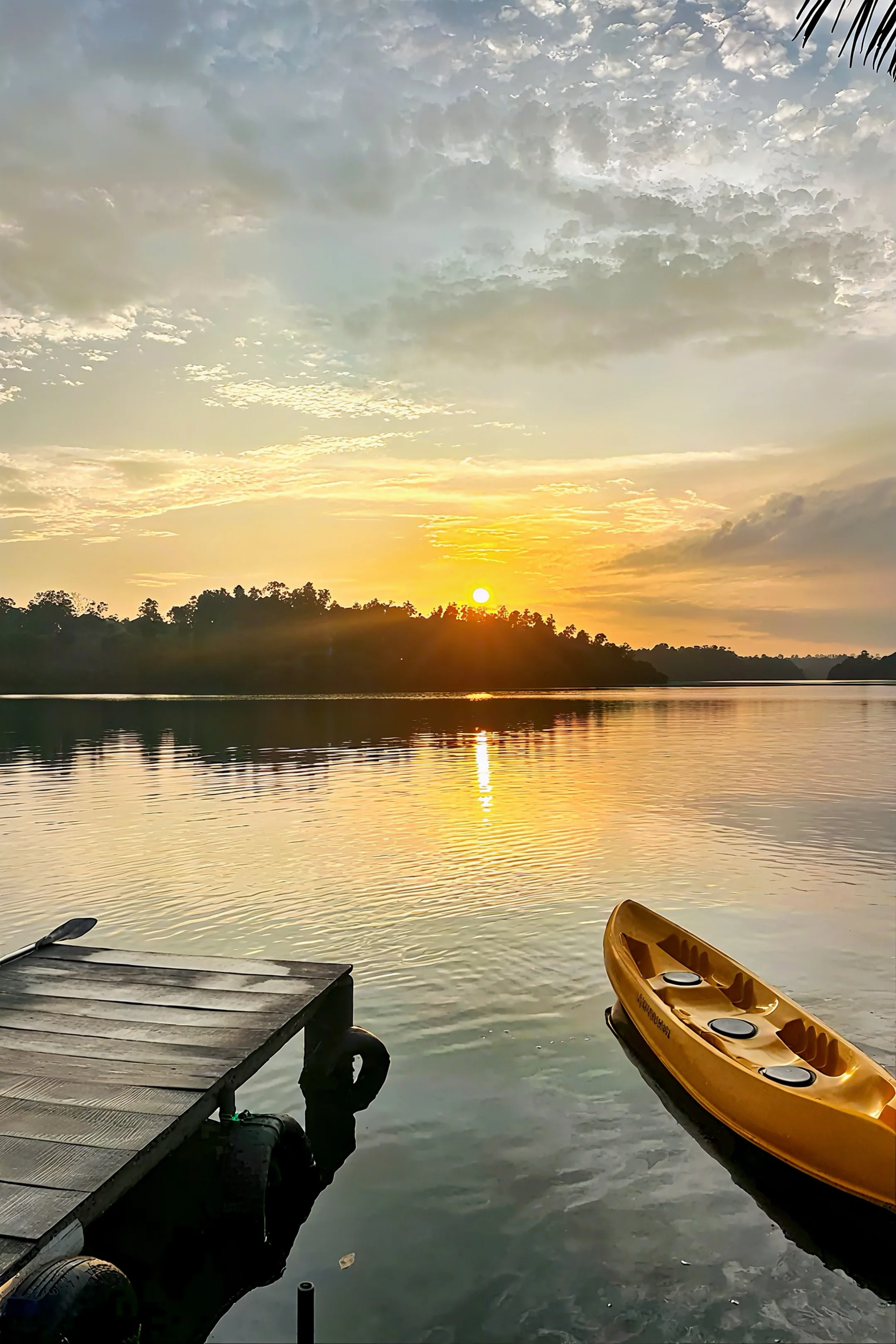
- Photography light is exceptional. The low angle of the winter sun at 6–8 AM creates long, warm shadows across the water. Mist forms above the warmer surface water and burns off by 8:30 AM. The 45 minutes around sunrise in January is arguably the best photography window of the year.
The drawback: peak tourist season. The Galle Fort crowd and the beach hotels fill up from late December, and early-morning tour slots book up quickly, especially between Christmas and mid-January.
March – April: Transition
The northeast monsoon weakens in March and April brings the inter-monsoon. Weather becomes unpredictable — calm mornings can give way to afternoon thunderstorms, and humidity rises sharply. Temperatures on the water reach 33–34°C by mid-morning.
The upside: migratory birds are still present through March before their return north. Flowering trees around the lake attract sunbirds and other nectarivores. Kingfisher activity is intense as the breeding season approaches. These months can be excellent if you book the earliest sunrise slots and are off the water before 9 AM.
May – August: The Monsoon Window
The southwest monsoon brings rain, but not the continuous downpour that the word "monsoon" suggests to most visitors. In reality, the pattern is: still mornings, building cloud, heavy afternoon or evening rain, clearing overnight. A 6 AM kayak is entirely viable on most days.
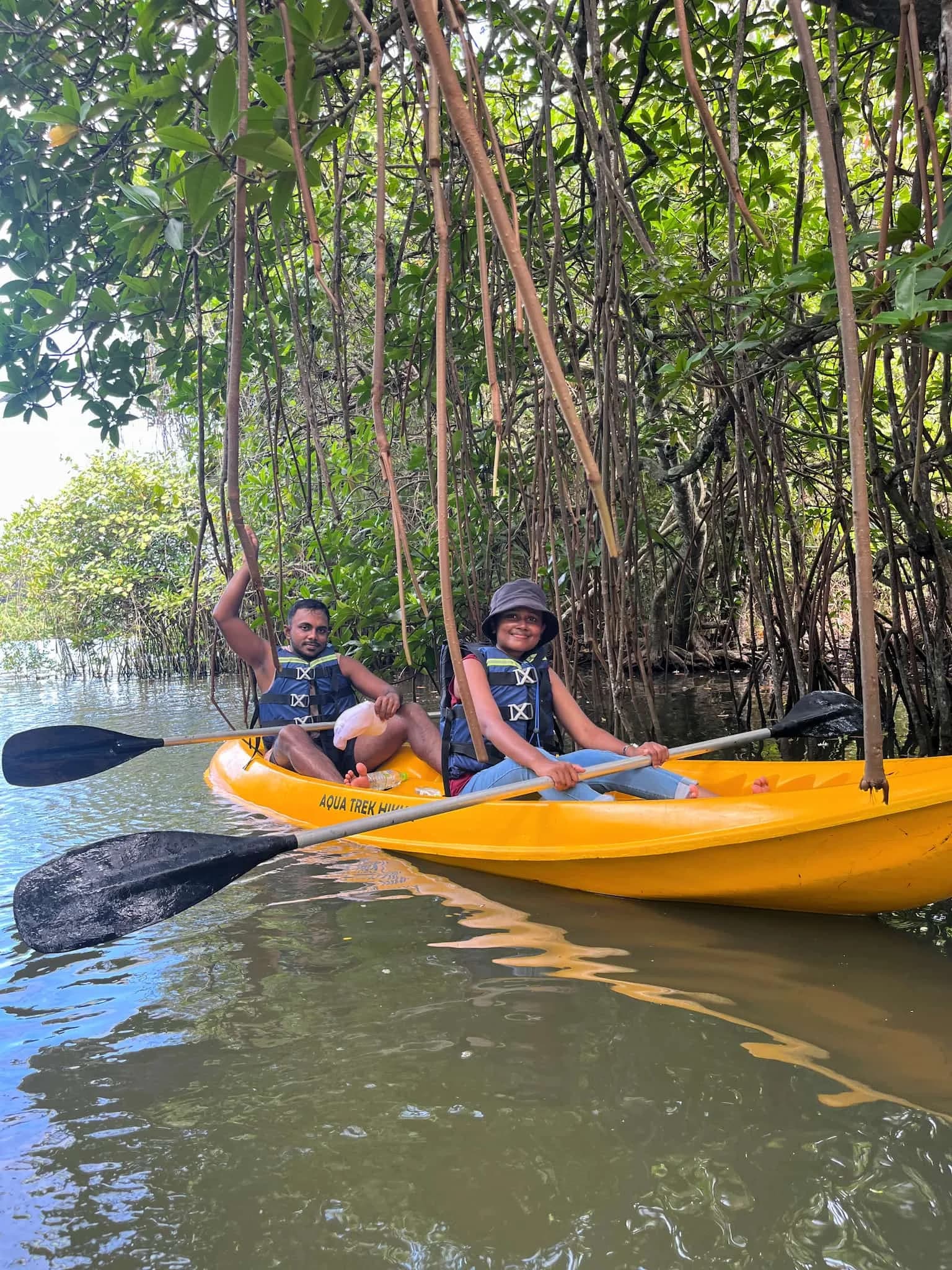
The lake in this season looks completely different. The vegetation is an almost electric green. The mangrove canopy is thick and full. The lake levels rise — channels that are shallow in January become navigable — and the mangrove interior opens up to kayaks in ways it cannot in the dry season.
Kingfishers breed in May and June, and the behaviour around nest sites is spectacular. Purple Herons become more visible as reed growth thickens. Little Cormorants and Oriental Darters are present year-round but more active in the cooler morning air. The lake is quieter — fewer tour boats, smaller crowds at the put-in, more wildlife habituated to kayaks.
If you are visiting Sri Lanka primarily for the east coast (Trincomalee, Arugam Bay — in full swing May to September), Rathgama is worth a stop-over en route.
September – October: Pre-Season
September can be rough, with the monsoon still delivering significant rainfall. October is the transition: rain tapers off, migratory birds begin arriving from mid-month, and the lake is at its emptiest of the year. This is genuinely a sleeper month for birdwatching — the first migratory waders and ducks arrive before the tourist season opens, guides have more time, and conditions are improving daily.
The Best Time of Day: Why Sunrise Matters
Whatever month you visit, the single most important variable is not season — it is time of day.
Sunrise to 9 AM accounts for roughly 70% of all bird activity at the lake. Fish are most active near the surface in the first hour of light, and the kingfishers, herons, and cormorants concentrate where fish concentrate. Air temperature is cool enough that wildlife stays active rather than seeking shade. The light is directional and warm, not the flat white of midday.
By 10 AM, activity visibly drops. By 11 AM, the lake is quiet except for resident cormorants and the occasional Brahminy Kite. The afternoon tour (sunset) catches a second, shorter burst of activity from about 4:30 PM as the day cools.
For first-time visitors, the Sunrise Wildlife Tour — 6 AM start — is the consistent recommendation regardless of season.
Water Temperature and Comfort
Rathgama is a brackish lake, not open sea, and water temperature stays comfortable year-round: 27–30°C. There is no cold-water season. The kayaks are stable open-tops, so getting splashed is the main water contact most guests have. Full immersion is welcome if you want it — the water is clean and warm.
Sun exposure is the main hazard. Rathgama sits at 6°N latitude and the UV index is high year-round. A wide-brim hat, reef-safe sunscreen, and a long-sleeve rash guard are recommended over a T-shirt, especially on the open-water sections of the tour.
Our Honest Recommendation
If you can choose freely: November through February for wildlife, December or January for photography, May through July for scenery and solitude. If you cannot choose — if your Sri Lanka trip is already planned and Rathgama is a day trip off a fixed itinerary — book the earliest available sunrise tour regardless of month. The difference between a good and a great experience at Rathgama is almost always 6 AM versus 9 AM, not January versus July.